
Beschorneria yuccoides
Beschorneria yuccoides hort. ex K. Koch
Description
Growing requirements
Beschorneria yuccoides is a striking evergreen succulent belonging to the Asparagaceae family. Native to the mountainous regions of Mexico, it has become a sought-after plant for gardens in mild climates due to its exotic appearance.
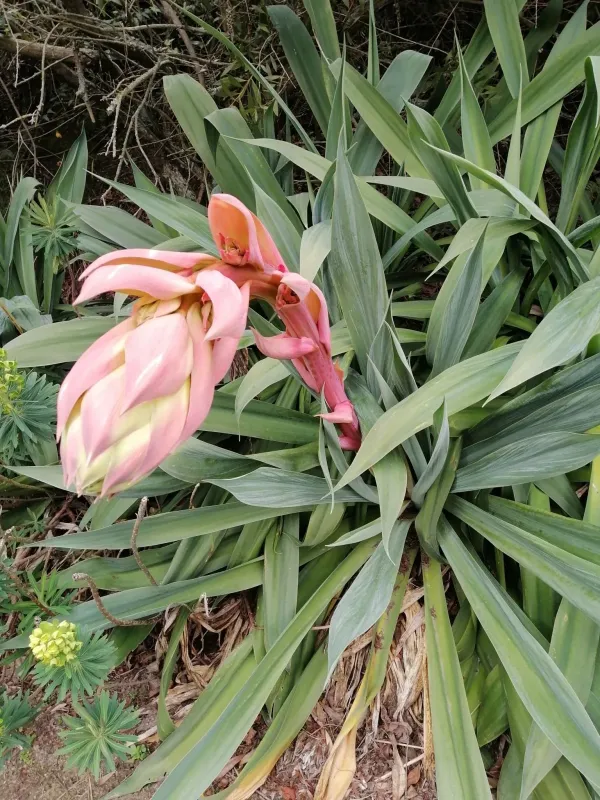
The plant features a large basal rosette of succulent, sword-shaped leaves. Its most distinctive characteristic is the tall, vibrant pink or coral-red flower stalk, which can rise significantly above the foliage during the blooming season.
This species requires a site with full sun and excellent drainage. It thrives in gravelly or gritty soils that prevent moisture from accumulating around the root crown, which is essential to prevent physiological decay.
Climate adaptability is limited; it is generally hardy down to approximately -5°C. In colder zones, it must be grown in containers to allow for relocation to a frost-free area, such as a greenhouse or a sunny conservatory during winter.
Agronomic management involves periodic light watering during the growth cycle and keeping the substrate completely dry during the dormant winter phase to ensure the plant does not succumb to rotting issues.
Main diseases and pests
The primary threat to the health of Beschorneria yuccoides is the development of fungal rot in the roots and base of the rosette, typically caused by excessive soil moisture.
Pest pressures include the mealybug and red spider mite, which are particularly prevalent in protected cultivation environments with low airflow.
Effective control measures include the use of systemic insecticides during early infestation stages and maintaining a low-humidity environment around the foliage.
Proper sanitation is vital; remove dead or decaying outer leaves periodically to discourage pests from establishing their colonies between the leaf bases.
Monitoring for any signs of leaf discoloration or wilting can prevent systemic infections and ensure the continued ornamental quality of this unique succulent species.