
Gagnepain's barberry
Berberis hybrido-gagnepainii
Description
Growing requirements
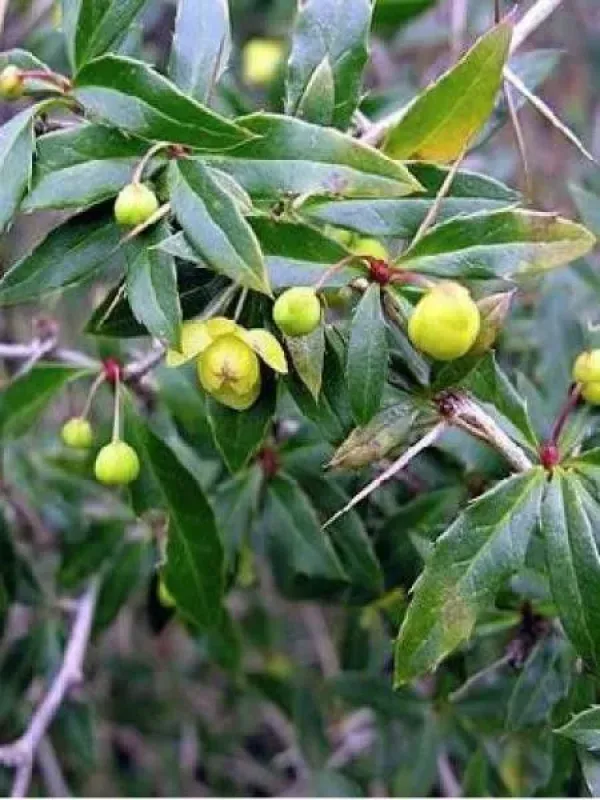
Gagnepain's barberry (Berberis hybrido-gagnepainii) is an ornamental shrub belonging to the Berberidaceae family. It is recognized for its architectural form, evergreen foliage with serrated edges, and its unique ability to add structure to landscape designs throughout the year.
This shrub performs best in locations with full sun to partial shade. To ensure optimal growth, it requires soil with excellent drainage, as the plant is sensitive to waterlogged conditions which often lead to root suffocation and subsequent decay of the root system.
When selecting a planting site, it is crucial to protect the shrub from harsh, drying winds. While relatively hardy, young specimens benefit significantly from protective mulch around the base to insulate the roots during the first few years after establishment.
Watering requirements are moderate; the plant should be watered deeply but infrequently, allowing the top layer of soil to dry out between sessions. Over-watering is a common mistake that creates an environment conducive to fungal proliferation.
Maintenance pruning is essential for keeping the shrub dense and vigorous. It should be conducted in late winter or early spring to remove dead wood and encourage new growth. Given the plant's thorns, gardening gloves are mandatory during all maintenance tasks.
Main diseases and pests
Powdery mildew represents the primary fungal challenge for this species, particularly in regions with high humidity or poor air circulation. It manifests as a dusty white coating on the leaves, which can lead to premature leaf drop if left untreated.
Common insect pests include aphids and scale insects, which feed on the sap of tender new growth. Aphid infestations often weaken the shrub, leading to stunted shoot development and a general decline in the plant's aesthetic appeal.
Integrated pest management involves regular monitoring of the foliage, especially during the spring flush. Removing heavily infested branches and applying horticultural soaps or systemic insecticides can effectively manage these pest populations.
Leaf spot diseases, caused by various fungal pathogens, may occur during wet seasons. These typically result in dark, circular lesions on the leaves, necessitating the removal of fallen debris to break the disease cycle in the garden.
Strategic spacing between individual plants is the most effective cultural control measure against both fungal and pest issues. Proper ventilation ensures that moisture does not linger on the leaf surfaces, significantly reducing the risk of infection.