
Variegated false melic
Bellardiochloa variegata (Lam.) Kerguélen
Description
Growing requirements
Bellardiochloa variegata, commonly known as variegated false melic, is a perennial grass species belonging to the Poaceae family. It is predominantly found in alpine and subalpine zones, showcasing a strong adaptation to high-altitude environments.
The distribution range of this species includes various mountain ranges across Europe. It thrives in stony, calcicolous habitats, often colonizing slopes where thin soils and harsh environmental conditions prevent the growth of more sensitive species.
Regarding its ecological requirements, the plant demands high solar radiation and well-drained soils. It is highly resistant to frost and cold winds, which allows it to maintain growth during the brief alpine summer season.
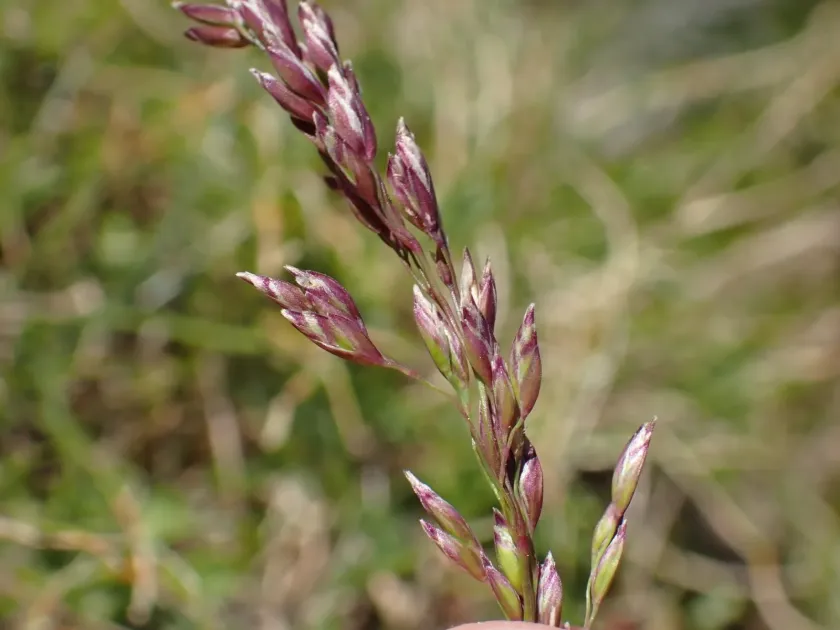
Botanically, it is characterized by the formation of compact tufts and narrow leaves. This growth form is an evolutionary mechanism to protect the plant from extreme temperatures and to optimize the limited nutrient uptake from alpine soils.
In terms of agricultural utility, Bellardiochloa variegata serves as an essential forage source for livestock grazing in mountain regions. Its resilience and nutritional profile make it a valued component of natural mountain pastures and grazing lands.