
Chuckwalla's delight
Bebbia juncea
Description
Growing requirements
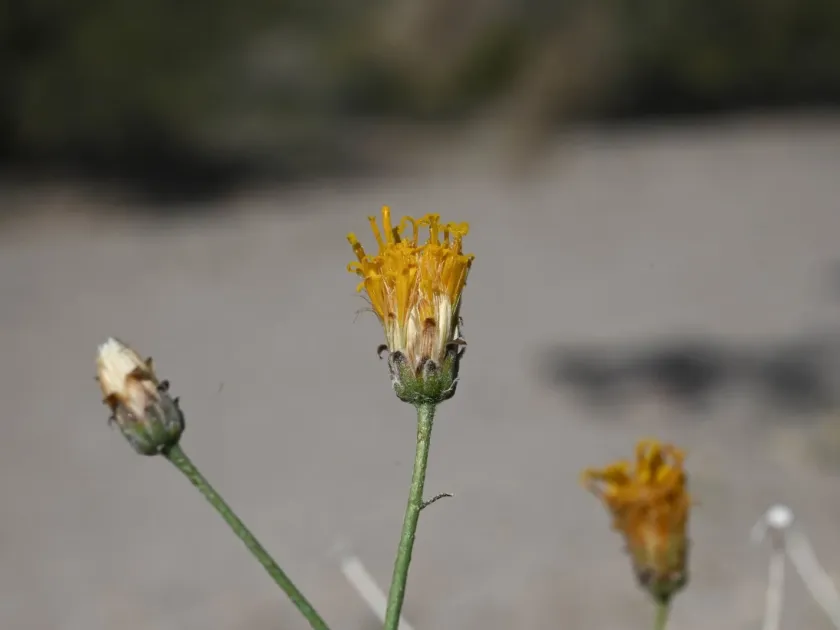
Bebbia juncea, commonly known as Chuckwalla's delight, is a perennial subshrub belonging to the Asteraceae family. It is a signature species of the desert landscapes in North America.
The native distribution range spans from the southwestern United States into northern Mexico. It thrives in harsh, arid climates where other vegetation often struggles to survive.
Botanically, the plant is characterized by its thin, rush-like stems which serve as the primary photosynthetic organs. It typically reaches a height of about one meter, forming a rounded, twiggy silhouette.
Regarding soil requirements, it necessitates well-drained, sandy or gravelly soils. It has a high tolerance for nutrient-poor environments, making it suitable for reclaimed desert sites.
The species serves as a crucial component of xeriscaping and ecological restoration projects. Its flowers are highly attractive to desert pollinators, including bees and butterflies.
Main diseases and pests
The plant is naturally resistant to many pests due to its specialized chemical defenses. Environmental stressors such as prolonged extreme drought are the primary limiting factors for growth.
Fungal infections are extremely uncommon unless the plant is subjected to excessive soil moisture or poor drainage conditions. No significant disease management is required for native stands.
Insects that feed on stems or reproductive structures can occasionally become a threat if their populations are unnaturally high. However, natural checks usually balance these populations.
Human activities, particularly uncontrolled grazing, pose a threat to the density of populations in certain areas. Sustainable land use is vital for its conservation in the wild.
Routine monitoring of the plant's health during the spring bloom period is sufficient for ensuring the vitality of the population. Preventive measures are rarely needed for this hardy shrub.