
Ponytail palm
Beaucarnea recurvata Lem.
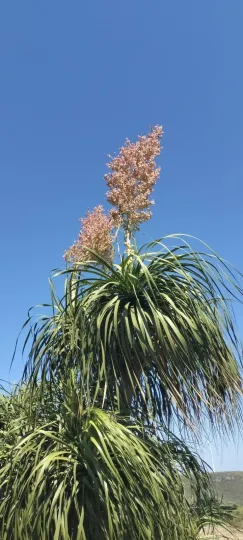
Description
Growing requirements
Beaucarnea recurvata, commonly known as the ponytail palm, is a member of the Asparagaceae family. Despite its common name, it is not a true palm but a succulent native to the semi-arid regions of eastern Mexico.
The plant is botanically distinguished by its swollen base, or caudex, which functions as a water reservoir. This unique adaptation allows the plant to thrive in regions with irregular rainfall patterns and high temperatures.
Cultivation requires bright, indirect to direct light. In agricultural or horticultural settings, ensuring proper exposure is essential to maintain the structural integrity and healthy growth rate of the plant.
The soil requirements are strict: a well-draining substrate is mandatory. Typically, a mix designed for cacti or succulents, providing excellent aeration and minimal water retention, is used to prevent root issues.
Regarding commercial use, it is a highly valued ornamental plant. It is widely grown in containers for interior decoration, offices, and conservatory collections, favored for its longevity and architectural appearance.
Main diseases and pests
Root rot is the most significant threat to the ponytail palm. Caused by overwatering or poor drainage, it manifests as soft, brown tissue at the base of the trunk, which can rapidly lead to total plant failure.
Scale insects are common pests that attach themselves to the foliage. They extract plant sap and excrete honeydew, which may lead to the development of sooty mold, compromising the aesthetic value of the crop.
Spider mites are prevalent in arid environments, thriving during periods of low humidity. These microscopic pests cause yellow stippling on the leaves and can cause foliage drop if the infestation remains unchecked.
Mealybugs can be found in the tight crevices of the leaf crown. Their presence is indicated by a white, cottony appearance, and they can cause significant stress to the plant by feeding on its tissues.
Effective pest management relies on early detection and the use of insecticidal soaps or systemic pesticides. Maintaining appropriate environmental conditions remains the most effective strategy for preventing pest outbreaks.