
Basselinia glabrata
Basselinia glabrata
Description
Growing requirements
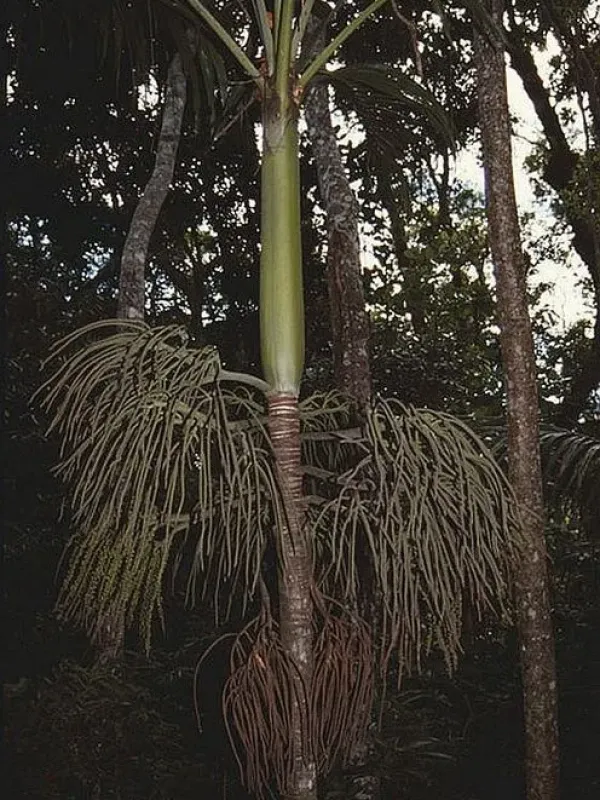
Basselinia glabrata is a distinct palm species belonging to the Arecaceae family. This plant is endemic to the tropical forests of New Caledonia, where it thrives in specific ecological niches.
In its native environment, the palm prefers humid tropical conditions. It is typically found growing beneath the canopy, which dictates its preference for filtered or dappled sunlight rather than intense direct exposure.
Successful cultivation requires a well-draining, nutrient-rich potting mix that mimics the forest floor. Maintaining consistent moisture is crucial, but it is equally important to avoid waterlogged conditions.
The botanical structure consists of a slender stem and delicate, pinnate fronds. It is a slow-growing species, which makes it a desirable specimen for those interested in long-term ornamental palm cultivation.
Economically and horticulturally, it is primarily used for ornamental purposes in conservatories, botanical gardens, and specialized private collections due to its rarity and aesthetic appeal.
Main diseases and pests
The primary threats to Basselinia glabrata in cultivation are root-related pathogens, often triggered by overwatering or poor drainage systems in the containers.
Common indoor pests such as scale insects and spider mites frequently target the fronds. These pests thrive in dry air conditions and can cause significant foliage damage if left unchecked.
Nutrient deficiencies represent another threat, often manifesting as discoloration or chlorosis on the leaves when the plant is not provided with an appropriate balanced fertilizer.
Cultural management involves ensuring proper airflow and humidity levels to prevent the colonization of pests and to discourage fungal growth on the leaves.
Regular monitoring of the palm's health, particularly the underside of the leaves and the base of the stem, is essential for early detection of potential threats.