
Bahia oppositifolia
Bahia oppositifolia
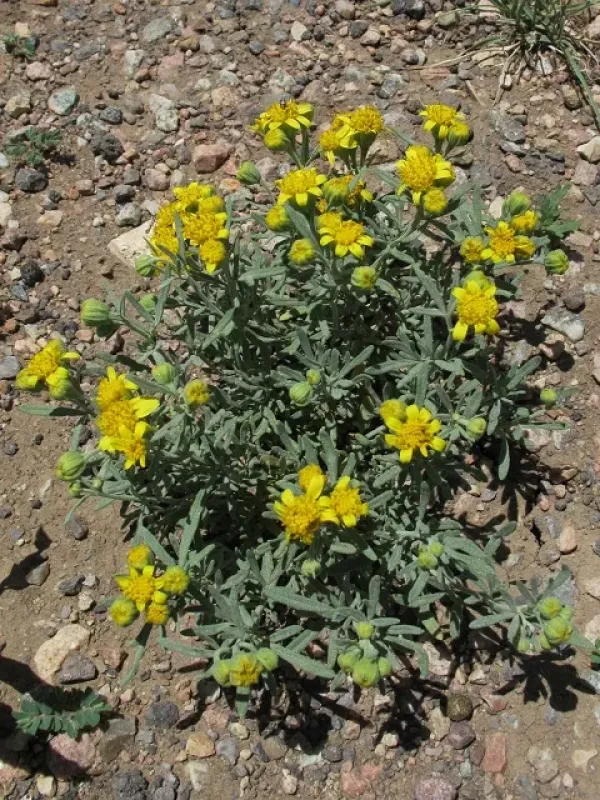
Description
Growing requirements
Bahia oppositifolia, commonly known as plains bahia, is a perennial herbaceous plant belonging to the Asteraceae family. It is native to the central and western regions of North America, typically found in dry plains and limestone prairies.
The plant possesses a robust root system, which is a key adaptation for surviving in semi-arid environments. It thrives in well-drained, nutrient-poor, and often alkaline or rocky soils where other species may struggle.
In terms of climatic requirements, it demands full sun exposure to maintain vigorous growth. It is highly drought-tolerant, exhibiting excellent resilience against the intense heat prevalent in its native habitat during the summer months.
Botanically, it is identified by its opposite leaves, which give the plant its specific epithet. The stems are branched and often covered in fine pubescence, providing protection against moisture loss.
The plant produces small, yellow, daisy-like flower heads that attract various pollinators, contributing to the biodiversity of the local ecosystem in which it is grown.
Main diseases and pests
As a wild plant adapted to harsh conditions, Bahia oppositifolia has relatively few natural pests. However, in cultivated settings, it may be susceptible to opportunistic fungal infections if the environment remains too damp.
Root rot is the most common threat when the soil drainage is inadequate. Ensuring that the soil structure permits proper aeration is the best preventive measure against such conditions.
Common agricultural pests like aphids or beetle larvae may occasionally feed on the foliage or stems, but they rarely cause significant economic damage to healthy, established populations.
Effective management involves maintaining appropriate spacing between plants to ensure good air circulation, which reduces the humidity levels around the plant base.
Integrated pest management strategies are rarely required for this species, given its high resilience and evolutionary history in rugged landscape conditions.