
Austrotaxus spicata
Austrotaxus spicata
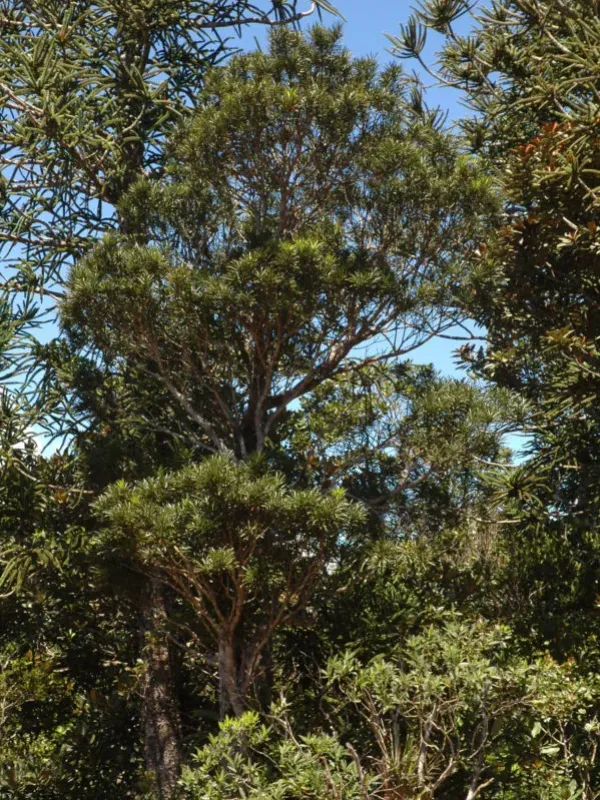
Description
Growing requirements
Austrotaxus spicata is a remarkable conifer species representing the monotypic genus in the Taxaceae family. Endemic to the island of New Caledonia, it stands out as a living fossil, providing insights into the evolutionary history of ancient gymnosperms.
The plant thrives in moist tropical forest environments, specifically favoring the mountainous terrain of its native habitat. It requires high atmospheric humidity and consistent soil moisture, reflecting the stable conditions of the New Caledonian uplands where it naturally occurs.
Regarding soil requirements, the species prefers well-drained, nutrient-rich substrates that mimic the conditions of the forest floor. Cultivation is extremely limited, as the plant cannot tolerate temperate frost or the arid conditions typical of many commercial agricultural zones, confining its presence to specialized botanical collections.
Botanically, it is dioecious, with male and female reproductive organs on separate trees. Its needle-like leaves and unique spicate female structures distinguish it from other members of the Taxaceae family, marking its position as a distinctive botanical subject for taxonomic study.
Economic utility is largely restricted to scientific research and biodiversity conservation efforts. It serves as a prime example of island endemism, requiring careful management to protect it from the threats posed by habitat fragmentation and changing ecological conditions in the Pacific region.
Main diseases and pests
The primary threat to Austrotaxus spicata is the destruction of its native rainforest habitat. Anthropogenic pressures, including logging and local infrastructure development, significantly jeopardize the remaining wild populations of this ancient species.
While specific pests and diseases are not extensively documented in the wild, plants grown in greenhouse conditions can be susceptible to root rot if drainage is insufficient. In restricted environments, standard coniferous pests such as spider mites and scale insects may also pose risks to plant vitality.