
Austrocephalocereus dybowskii
Austrocephalocereus dybowskii (Rol.-Goss.) Backeb.
Description
Growing requirements
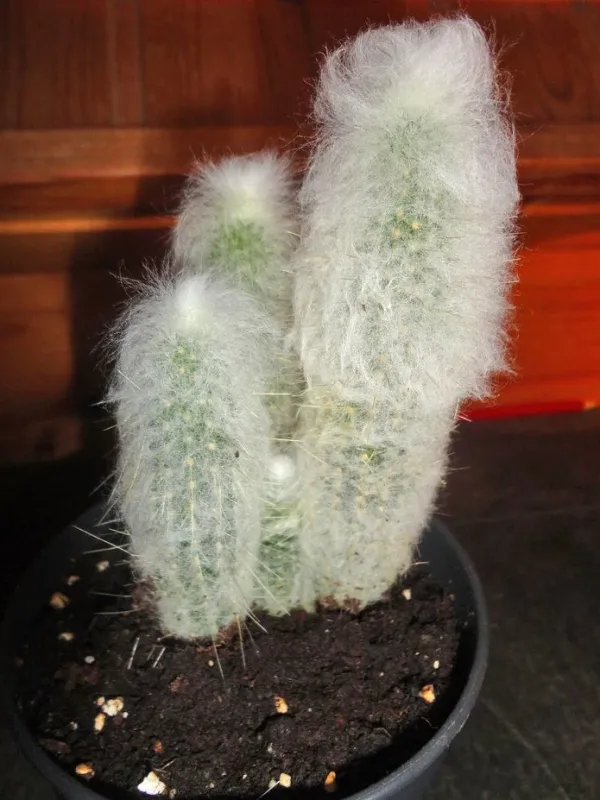
Austrocephalocereus dybowskii is a distinctive cactus species belonging to the Cactaceae family, native to the arid regions of Brazil. This plant is primarily cultivated by specialized nurseries and enthusiasts who value its unique columnar form and dense, hair-like spines.
Botanically, this species is noted for its slow-growing habit and the development of a terminal cephalium when mature. The dense woolly covering acts as an evolutionary mechanism, providing protection from intense equatorial solar radiation and preserving moisture within the succulent stem.
The agricultural requirements for this species are centered on mimicking its native habitat. A highly inorganic, porous substrate is essential, utilizing a mix of pumice, coarse sand, and a minimal amount of loam. Proper drainage is the most critical factor in preventing physiological disorders.
Exposure to direct, unfiltered sunlight is non-negotiable for healthy development. Without adequate solar intensity, the characteristic hair-like structures will become sparse, and the stem will lack the structural integrity required for normal maturity and potential flowering.
Watering protocols must be extremely disciplined. The substrate should be allowed to dry out completely between waterings, with significantly reduced or entirely withheld water during the dormancy period in winter. This practice mimics the natural seasonal cycles found in its Brazilian range.
Main diseases and pests
The primary threats to this culture are fungal pathogens, specifically those causing root rot, which are triggered by over-irrigation or inadequate drainage. These infections are often irreversible once they progress beyond the root zone, necessitating strict moisture management.
Pest management is focused on controlling mealybugs and spider mites, which find the dense hair-like covering an ideal shelter. Integrated pest management, involving systematic inspection and the use of targeted acaricides or insecticides, is necessary to maintain the plant's aesthetic and biological health.