
Austrobaileya scandens
Austrobaileya scandens
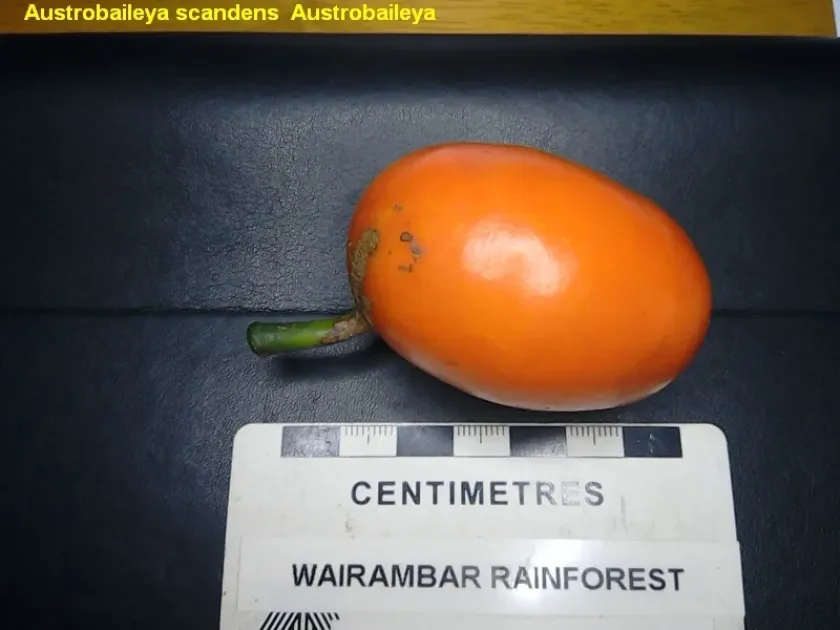
Description
Growing requirements
Austrobaileya scandens is a rare woody vine and the sole member of the Austrobaileyaceae family. As a primitive angiosperm, this plant serves as a living link to the ancient evolution of flowering plants, making it a prized specimen for botanical collections.
Native to the humid rainforests of northeastern Queensland, Australia, this species thrives in sheltered, low-light environments. It relies on the dense canopy for protection against direct sunlight and relies on high atmospheric humidity to maintain its metabolic functions.
Cultivating this species requires precise soil management. It prefers loose, well-draining substrates rich in organic matter, mimicking the forest floor conditions. Consistent moisture is vital, as the plant cannot tolerate dry periods or root desiccation.
Climate control is the most challenging aspect of growing Austrobaileya. It demands stable, warm temperatures year-round, as the plant is not frost-tolerant. Greenhouse or conservatory cultivation is essential in non-tropical climates to ensure healthy development.
Botanically, the plant is known for its leathery leaves containing oil glands and its unique, primitive floral structure. Its climbing habit is naturally adapted to reach for limited sunlight in the dense rainforest understory, necessitating strong supports in a garden setting.
Main diseases and pests
When grown in protected environments, Austrobaileya scandens can be susceptible to common greenhouse pests. Mealybugs and spider mites are frequent threats, particularly if the humidity levels are not maintained at a sufficiently high level.
Root pathogens represent the most significant threat to the survival of the plant. Overwatering or poor drainage often triggers fungal infections that quickly compromise the vascular system of the vine, leading to irreversible wilting.
Poor air circulation can lead to the development of fungal leaf spot diseases. It is essential to ensure that the environment has adequate airflow to prevent the accumulation of stagnant air, which encourages mold growth on the dense foliage.
Nutritional imbalances caused by incorrect soil pH can affect the plant's vigor. As a plant adapted to acidic forest soils, Austrobaileya requires a substrate with a low pH to ensure proper absorption of micronutrients.
Mechanical damage to the main stems or roots can provide entry points for secondary infections. Careful handling during repotting or pruning is necessary to maintain the integrity of the plant and ensure longevity in cultivation.