
Asplenium wrightii
Asplenium wrightii
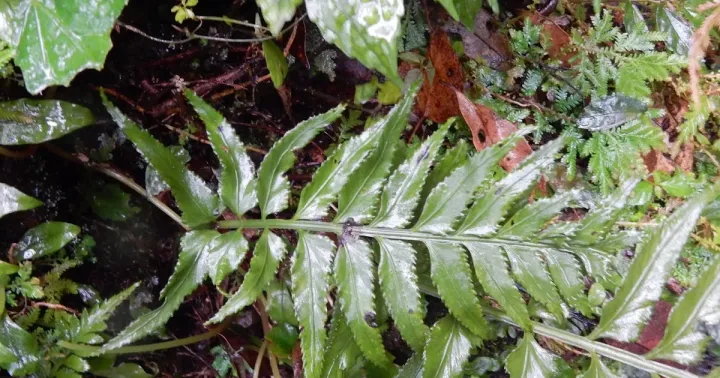
Description
Growing requirements
Asplenium wrightii belongs to the family Aspleniaceae. This perennial epiphytic or terrestrial plant is native to the humid subtropical and tropical forests of East Asia, including regions in Japan, China, and Taiwan.
To successfully cultivate this species, it is critical to provide high atmospheric humidity that matches its natural habitat. The plant prefers shaded areas, as direct sunlight causes leaf burns and degradation of the root system.
The optimal substrate must have excellent aeration and high water-holding capacity. An ideal mix consists of conifer bark, sphagnum moss, and leaf mold, with the addition of charcoal to prevent the medium from becoming overly acidic.
The temperature regime for the crop should be stable, without sharp fluctuations. During the growing season, the air temperature should be maintained between +20 and +25 degrees Celsius, while avoiding drafts and sudden blasts of dry air.
Watering should be regular but moderate, using soft, room-temperature settled water. Stagnant water in the drainage tray is unacceptable, as it promotes the development of rot in the rhizomes and can cause the plant to die.
Main diseases and pests
The main threat to Asplenium wrightii comes from soil-borne pathogens that develop in waterlogged conditions. Most frequently, the plant is affected by root rots caused by Pythium and Phytophthora fungi, leading to rapid wilting of the foliage.
Among pests, scale insects and mealybugs cause the most significant damage by sucking sap from the leaves, leaving characteristic spots and sticky residue. Upon detection, mechanical removal and treatment with systemic insecticides are necessary.
The spider mite poses a serious threat in environments with low humidity. This pest reproduces rapidly on the underside of the fronds, causing yellowing and premature death of the leaf tissue, which significantly reduces the plant's ornamental value.
Mealybugs often hide in leaf axils and near the base of the rhizome, making them difficult to detect in the early stages. Regular visual inspection and maintaining optimal microclimate conditions are the best methods for preventing such infestations.
To prevent the spread of fungal diseases, it is important to follow the correct watering regime and ensure air circulation around the plants. In case of infection, immediate repotting into fresh substrate with the removal of affected parts is recommended.