
California sagebrush
Artemisia californica
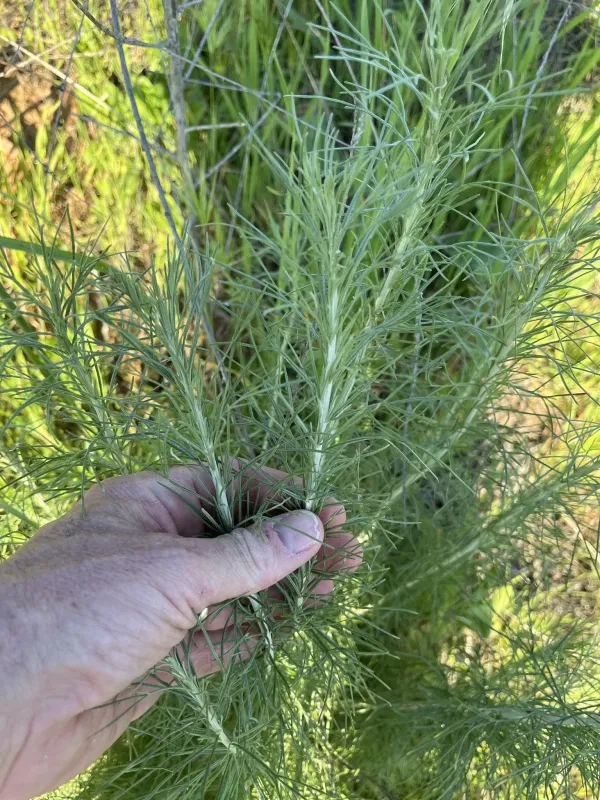
Description
Growing requirements
California sagebrush (Artemisia californica) is a perennial evergreen subshrub belonging to the Asteraceae family. Native to the coastal regions of California and Baja California, it serves as a keystone species within the coastal sage scrub plant community.
This plant exhibits remarkable drought tolerance and thrives in well-draining, nutrient-poor soils. It is well-adapted to Mediterranean-type climates, characterized by long, dry, hot summers and mild, wet winters, making it highly suitable for xeriscaping.
Full sun exposure is crucial for the development of this shrub. In shaded environments, the plant tends to become leggy and loses its characteristic dense, silvery-grey foliage, which is highly valued for its aesthetic appeal in landscape architecture.
Agricultural management requires regular, light pruning to maintain a compact, bushy form and prevent the base from becoming woody and bare. Excessive watering or heavy fertilizer application should be strictly avoided to prevent rapid, weak growth.
Its primary uses include erosion control on slopes, restoration of native habitats, and ornamental garden design. The plant is also highly aromatic, producing essential oils that serve as a natural insect repellent in residential gardens.
Main diseases and pests
The primary threats to California sagebrush are fungal infections, such as powdery mildew, which thrive in high-humidity or poorly ventilated conditions. Ensuring adequate spacing between plants is essential to promote airflow and mitigate these risks.
Aphids represent a common pest that may infest the soft, new growth during the spring season. In periods of extreme heat and water stress, spider mites can become an issue, potentially weakening the plant and causing leaf yellowing.
Root rot is a significant danger if the soil drainage is inadequate. Excessive moisture around the root zone is often fatal to this species, as it is evolved to handle arid conditions with minimal water saturation.
Soil-borne nematodes can pose a risk to the root system, particularly in clay-heavy soils. Selecting appropriate sandy or rocky planting substrates is a primary preventative measure against these subterranean pests.
To ensure long-term health, regular monitoring and sanitation are advised. Removing dead branches and debris from the base of the shrub helps reduce the harbor for pests and improves overall plant vigor through better circulation.