
Arenaria tetraquetra
Arenaria tetraquetra
Description
Growing requirements
Arenaria tetraquetra, commonly known as a type of sandwort, is a perennial herbaceous plant belonging to the Caryophyllaceae family. It is native to the mountainous regions of South-Western Europe, specifically the Pyrenees, where it thrives in rocky, high-altitude environments.
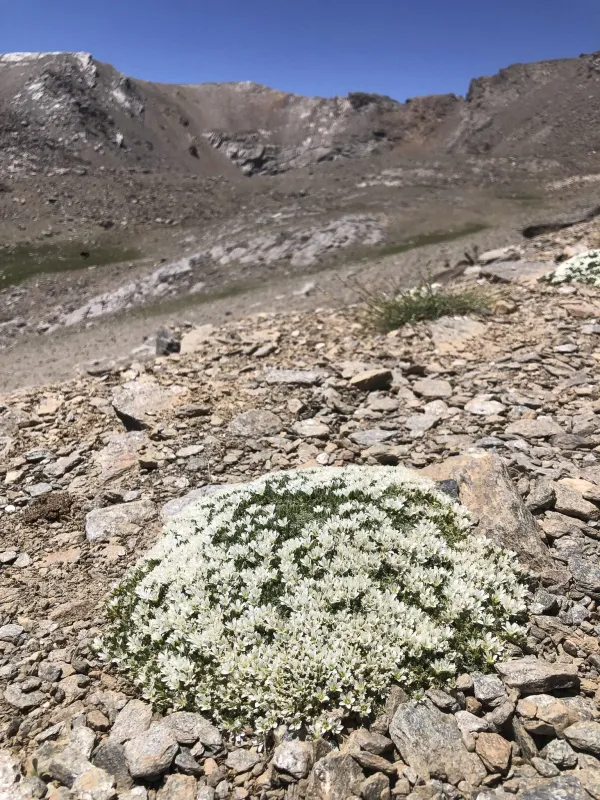
Botanically, this species is defined by its dense, cushion-forming habit. The leaves are small, rigid, and arranged in four distinct rows along the stems, giving the plant its characteristic square-like appearance. This structural adaptation helps the plant minimize transpiration in harsh alpine climates.
Regarding soil requirements, Arenaria tetraquetra demands a substrate with excellent drainage. It performs best in poor, gritty, or calcareous soils that mimic the rocky scree of its natural habitat. Rich, heavy, or water-retentive soils often lead to the rapid decline of the plant.
In terms of climatic conditions, this plant is well-adapted to cool temperatures and high solar radiation. It requires a full-sun location to maintain its tight, compact form; if grown in partial shade, the cushions tend to lose their density and become prone to fungal issues.
The primary horticultural use of Arenaria tetraquetra is in rock gardens, scree beds, and stone troughs. Its ability to create permanent, evergreen mats makes it a prized choice for landscaping projects that aim to replicate authentic mountain topography.
Main diseases and pests
Root rot is the most significant threat to the health of Arenaria tetraquetra, usually caused by overwatering or inadequate soil drainage. Fungal pathogens can quickly spread through the dense mat, leading to the collapse of the entire cushion.
Humidity and poor air circulation are contributing factors to the development of powdery mildew. This fungal disease appears as a white coating on the leaves, which significantly impacts the photosynthetic capacity of the plant and causes a decline in vigor.
Soil-dwelling larvae can pose a hidden danger to the root system, often going unnoticed until the damage is extensive. Regular monitoring of the cushions for patches of yellowing or loose attachment to the substrate is recommended as an early detection method.
Slugs and snails represent a common pest threat, particularly during wet seasons or in locations with high ambient moisture. These mollusks can consume the tender new growth, causing unsightly holes and uneven patches in the previously compact mound.
Effective management of these threats involves maintaining high standards of hygiene around the plants, such as removing organic debris from within the cushions. Ensuring proper air movement and avoiding waterlogging are essential strategies for successful cultivation.