
Areca catechu
Areca catechu L.
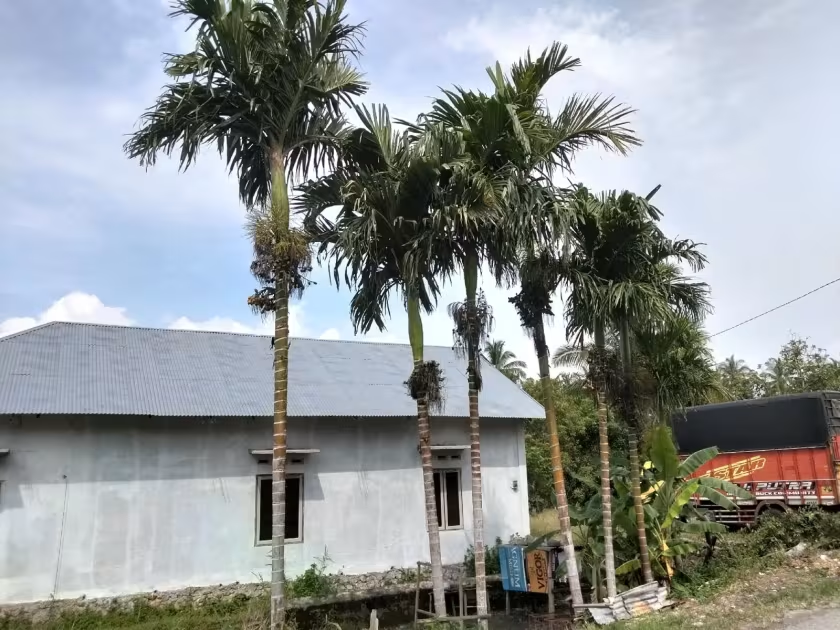
Description
Sowing dates
Areca catechu seeds are known for their short viability, which requires immediate sowing after harvesting. The ideal time for planting is the beginning of the rainy season to ensure optimal moisture levels for germination.
Seeds should be sown in nursery beds with a rich, well-draining substrate. They are typically placed vertically or on their side at a depth of about 2–3 cm in the soil.
The germination process is relatively slow and can last from 40 to 80 days. Constant soil moisture must be maintained, but care should be taken to prevent waterlogging, which could cause seed rot.
Seedlings are maintained in the nursery for 12–18 months until they reach a height of 30–50 cm. Once the seedlings have developed several healthy leaves, they are ready for transplanting to the main field.
Field spacing is critical for plantation success, typically ranging from 1,000 to 1,200 plants per hectare. This density allows for proper air circulation and light penetration, ensuring healthy palm growth.
Growing requirements
As a member of the Arecaceae family, Areca catechu thrives in humid, tropical climates. It is highly sensitive to cold temperatures and requires average annual temperatures between 22°C and 30°C.
The plant requires high rainfall, ideally between 1,500 mm and 3,000 mm annually. In regions with long dry seasons, supplementary irrigation is essential to prevent growth stunting.
Deep, fertile, and well-drained soils, such as sandy loams or alluvial soils, are most suitable for this crop. It does not tolerate saline soils or stagnant water, which often leads to root decay.
Protection from high-velocity winds is important, as the leaves are easily damaged. In early development stages, young palms benefit significantly from partial shade provided by intercropping.
Regular fertilization with nitrogen, phosphorus, and potassium, along with organic compost, is vital for the development of robust inflorescences and high-quality fruit production.
Yield
Areca palms typically start flowering and fruiting at the age of 5 to 8 years. A healthy, well-managed palm can maintain significant productivity for up to 50 years.
An average adult tree yields between 150 and 300 fruits per year. Since fruits do not ripen simultaneously, harvesting is usually a continuous process throughout the year.
Economic yields vary based on plantation management, but a successful orchard can produce approximately 2 to 3 tonnes of dried nuts per hectare annually.
The fruit, known as the areca nut, is harvested for use in traditional cultural practices, the pharmaceutical industry, and as a flavoring agent in various products.
Post-harvest processing, including de-husking and sun-drying, is crucial to ensuring the product meets market standards and remains stable during long-term storage.
Main diseases and pests
The most severe threat to areca production is Koleroga, or fruit rot, caused by Phytophthora species. This fungal disease spreads rapidly in humid conditions and can cause massive crop failure.
Yellow leaf disease, which causes stunted growth and chlorosis, significantly reduces the plant's metabolic activity. Proper sanitation and spacing are recommended to prevent its spread.
Pests such as stem-boring weevils are particularly dangerous, as their larvae bore into the trunk and destroy the palm's vascular system, often killing the tree.
Mites and various scale insects often infest young leaves, causing leaf curling and tissue damage, which weakens the plant and makes it susceptible to secondary infections.
Integrated Pest Management (IPM), including biological controls and targeted fungicidal applications, is necessary to manage these threats effectively and maintain plantation health.
Harvesting
Harvesting is performed manually, with workers climbing the palms or using long, specialized poles to reach the fruit bunches at the top of the canopy.
After harvesting, the nuts are separated from the bunches and undergo initial processing. This often includes boiling or direct sun-drying to reduce moisture content for preservation.
The quality of the harvest is determined by the stage of maturity, the size of the nut, and the absence of insect damage. Each grade is processed differently for various commercial purposes.
Efficient logistics are required during the harvest season to prevent post-harvest losses, as fresh areca nuts are prone to microbial growth if not dried properly.
Final storage requires cool, dry, and ventilated conditions. Protecting the product from excess humidity is essential to maintain the integrity of its alkaloids and market value.