
Apophyllum anomalum
Apophyllum anomalum
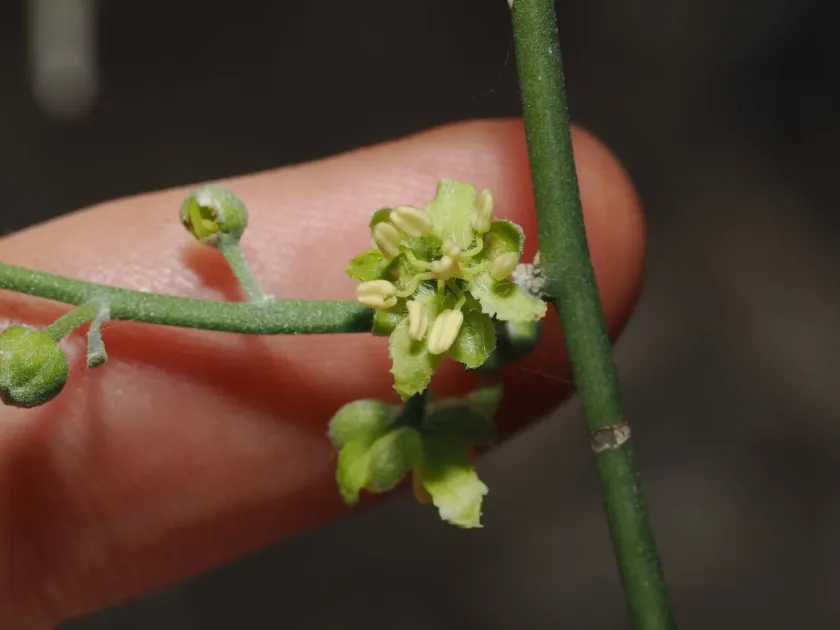
Description
Growing requirements
Apophyllum anomalum, commonly known as the Warrior Bush, belongs to the Capparaceae family and is native to the arid regions of Australia. This woody shrub is highly valued for its ability to thrive in extremely harsh environments where other crops would fail.
The plant exhibits remarkable xerophytic characteristics, including the reduction of leaves to minimize transpiration. The photosynthetic activity is carried out primarily by the stems, which are specially adapted to endure long-term water scarcity.
Regarding soil requirements, this species favors well-drained, sandy, or rocky substrates. It does not tolerate waterlogging, which can be fatal to the root system. Ideal site selection requires full sunlight exposure to maintain healthy growth and structural integrity.
In agricultural settings, maintaining an appropriate pH level (neutral to slightly alkaline) is beneficial for nutrient uptake. The plant is essentially drought-hardy, meaning it requires minimal irrigation once the root system is well-established.
Propagation is typically handled through seeds or cuttings, though growth rates are generally slow, reflecting the plant's strategy for survival in low-resource environments. Long-term management involves periodic pruning to maintain shape and density.
Main diseases and pests
The most significant threat to the health of Apophyllum anomalum is root rot caused by excessive humidity or poor soil drainage. Water management is the primary challenge for growers in non-arid climates.
Pests, such as scale insects, may occasionally infest the stems, particularly in stressed or improperly ventilated plants. Integrated pest management using systemic insecticides can effectively control these populations if detected early.
Fungal infections can develop during prolonged rainy seasons, manifesting as mildew on the stems. Good air circulation is essential to mitigate this risk and ensure the plant's vitality throughout the year.
Weed competition is a significant concern during the juvenile stage of the plant. Without proper weed control, young bushes struggle to access necessary soil nutrients and light, which significantly hampers their development.
Physical damage to the stem tissue should be avoided to prevent secondary infections. Careful handling during maintenance tasks is required to preserve the bark integrity of these resilient and unique shrubs.