
Apometzgeria pubescens
Apometzgeria pubescens
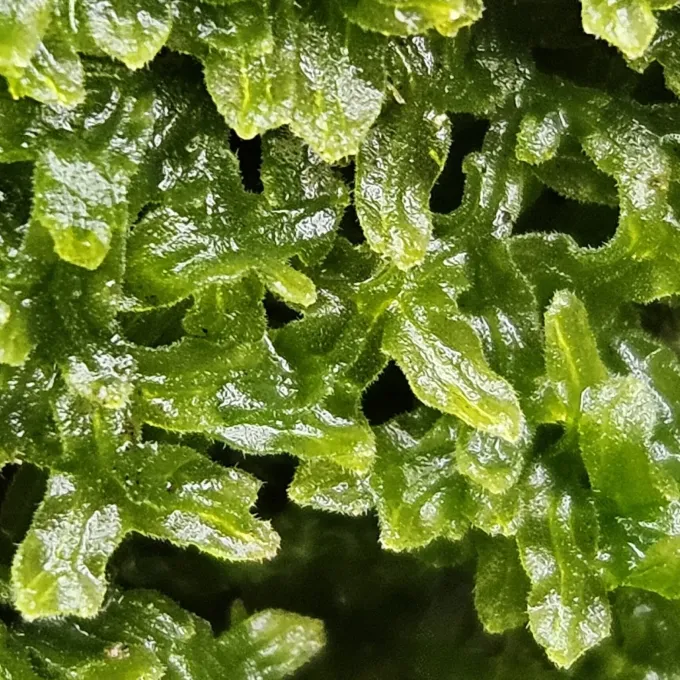
Description
Growing requirements
Apometzgeria pubescens is a distinct species of liverwort belonging to the Metzgeriaceae family. Unlike traditional agricultural crops, this species is a wild bryophyte that serves as a vital indicator of forest ecosystem health and microclimatic stability.
The plant is characterized by a thalloid structure covered in dense, single-celled hairs. This morphological adaptation creates a "fuzzy" appearance, which facilitates water retention and allows the organism to survive in environments where moisture levels frequently fluctuate.
Geographically, this species is distributed across temperate regions of the Northern Hemisphere. It primarily inhabits moist, shaded environments such as old-growth forests, rocky outcrops, and decaying logs where relative humidity remains consistently high throughout the year.
Cultivation of Apometzgeria pubescens is not practiced in agriculture, as it is a specialized organism adapted to specific natural niches. Scientific study focuses on its physiological resilience and its role in nutrient cycling within forest floor communities.
Understanding the biology of this liverwort provides insights into the evolutionary adaptations of non-vascular plants. Its sensitivity to environmental changes makes it a valuable subject for ecological studies regarding the impact of forest management on biodiversity.
Main diseases and pests
The primary threat to the stability of Apometzgeria pubescens populations is habitat fragmentation. The removal of canopy cover in forest areas drastically alters microclimates, leading to the desiccation of the delicate thalli of the liverwort.
Air pollution serves as a significant limiting factor for the survival of this species. Being a non-vascular plant, it directly absorbs atmospheric moisture and pollutants, making it highly susceptible to sulfur dioxide and other industrial emissions.
Climate change, manifesting as prolonged drought periods, poses a severe threat to the viability of existing colonies. The inability of the species to tolerate dry conditions leads to metabolic failure and subsequent decline of its localized populations.
Biological threats include competition from more aggressive, drought-tolerant species that occupy the same substrates. When the forest ecosystem is disturbed, the balance often shifts in favor of hardier plants, displacing the niche-specialized liverwort.
Small-scale disturbance from forest maintenance activities, such as clearing deadwood or excessive soil compaction, can destroy the fragile substrates required by Apometzgeria pubescens for anchoring and vegetative reproduction.