
Aphragmus minutus
Aphragmus minutus
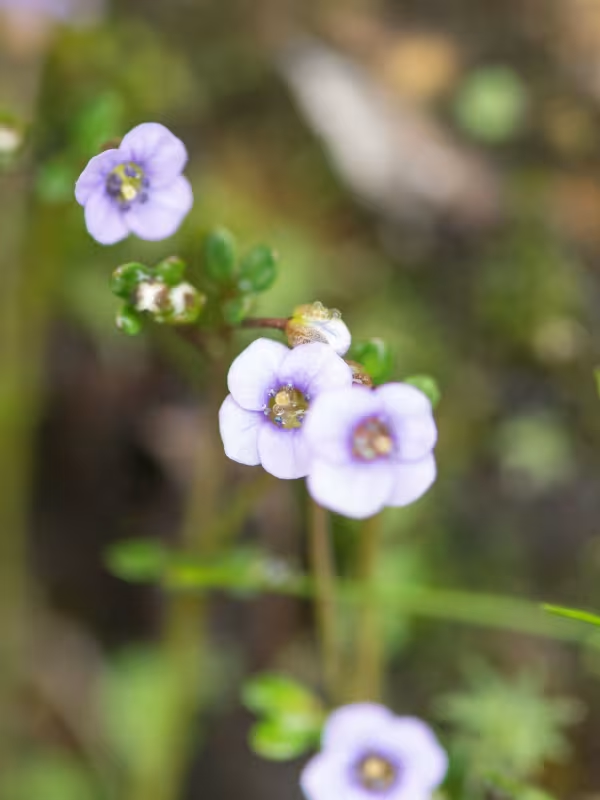
Description
Growing requirements
Aphragmus minutus is a small herbaceous plant belonging to the Brassicaceae family. It is naturally distributed throughout the alpine regions of Central Asia, where it thrives in harsh, high-altitude environments such as rock crevices and scree slopes.
Botanically, this species is defined by its compact growth habit and extreme resilience to cold. It has evolved to survive in nutrient-poor soils, relying on its specialized root structure to secure stability and moisture within rocky substrates.
Successful cultivation of Aphragmus minutus requires a deep understanding of its natural mountain habitat. It demands excellent drainage to prevent root rot, which is best achieved through the use of a mineral-based substrate mixed with grit or small volcanic rocks.
The climate requirements for this plant include cool temperatures and high atmospheric humidity. It is particularly sensitive to high heat and stagnant air, which means that greenhouse or garden environments must provide ample ventilation and protection from intense mid-day sun.
In terms of agricultural or horticultural utilization, Aphragmus minutus is primarily grown by specialists and botanical gardens. It serves as an important genetic resource for studying the adaptability of the Brassicaceae family to alpine and cryogenic ecological niches.