
Aphanopetalum resinosum
Aphanopetalum resinosum
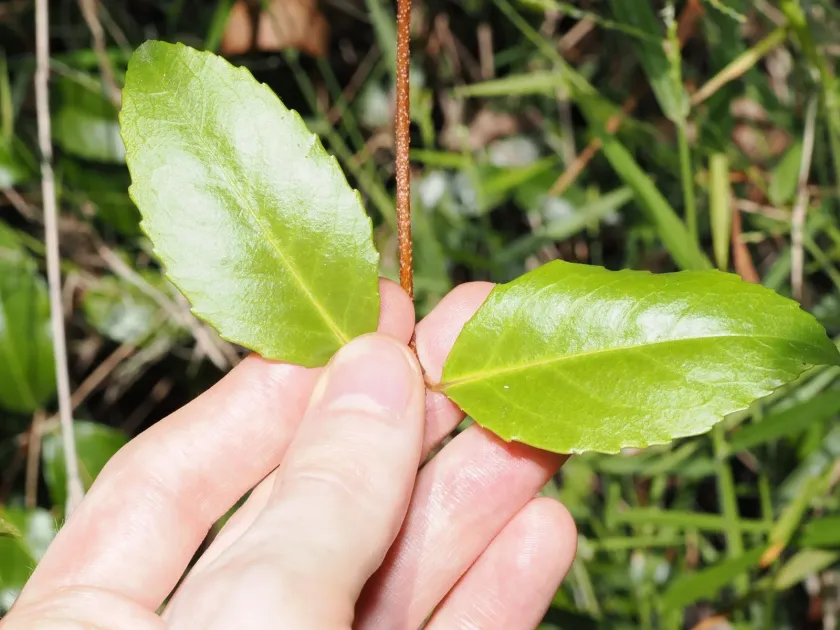
Description
Growing requirements
Aphanopetalum resinosum, commonly known as the Gum Vine, is a woody climber native to the rainforests and moist forests of eastern Australia. It belongs to the Aphanopetalaceae family, which is noted for its unique morphological adaptations to the understory environment.
The plant is distinguished by its glossy, opposite leaves that are covered in small, resinous glands, justifying its specific epithet. These glands secrete a sticky substance that likely serves as a protective mechanism against herbivores in its dense, competitive natural habitat.
Cultivation requires conditions that mimic the natural rainforest floor, specifically a shaded or semi-shaded environment. The plant thrives in high-humidity areas, making it sensitive to extreme drought or heat stress, which can quickly compromise the vitality of the foliage.
Soil composition must be rich in organic matter, well-drained, and maintained with a slightly acidic to neutral pH. A loose, aerated substrate is essential to support the sensitive root system and ensure that the plant has access to consistent nutrients throughout the growing season.
Maintenance techniques include providing structural support such as trellises or sturdy vertical stakes for the climbing stems. Because it is not a traditional food crop, its utility is primarily focused on environmental restoration, ornamental use in botanical gardens, and ecological research.