
Anthochlamys polygaloides
Anthochlamys polygaloides
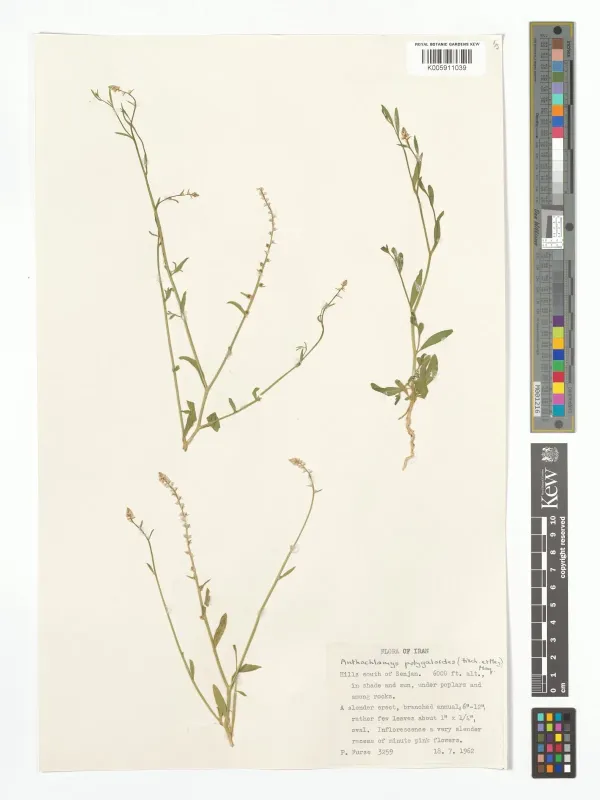
Description
Growing requirements
Anthochlamys polygaloides is an annual herbaceous plant belonging to the Amaranthaceae family. Historically grouped with the Chenopodiaceae, this species is a specialized xerophyte perfectly adapted to the harsh environments of arid deserts and semi-deserts of Central Asia, Iran, and Afghanistan.
The plant exhibits high tolerance to soil salinity and prolonged drought. Its morphological features, including small, alternate leaves and distinctive papery bracts, allow it to minimize transpiration and survive in regions with minimal precipitation and extreme daily temperature fluctuations.
Cultivation of this species requires well-drained, sandy or loamy soils. It thrives in high-light conditions and is highly sensitive to waterlogging. In an agricultural context, it is not grown as a commercial crop for human consumption but is valued for its ecological stability in degraded areas.
The agronomic potential of Anthochlamys polygaloides lies in its role in phytoremediation and soil stabilization. By creating a root network in shifting sands, it prevents wind erosion and helps restore the vegetative cover of desert pastures that have been overgrazed.
As a wild-growing desert plant, it does not require fertilizers or traditional irrigation. Its survival depends entirely on the natural seasonal moisture patterns typical of its native desert habitats, making it a low-input solution for arid land management.
Main diseases and pests
The primary biotic threats include various locust species, which pose a significant risk to biomass during outbreaks in arid ecosystems. These pests can rapidly consume the vegetation, leading to localized extinction of the plant in overgrazed or sensitive areas.
Pathogenic threats are mainly associated with soil-borne fungi that flourish under conditions of excessive moisture or improper drainage. When the soil water potential is consistently high, the plant is susceptible to root rot, which is the leading cause of plant death in artificial or poorly managed environments.