
Jersey fern
Anogramma leptophylla
Description
Growing requirements
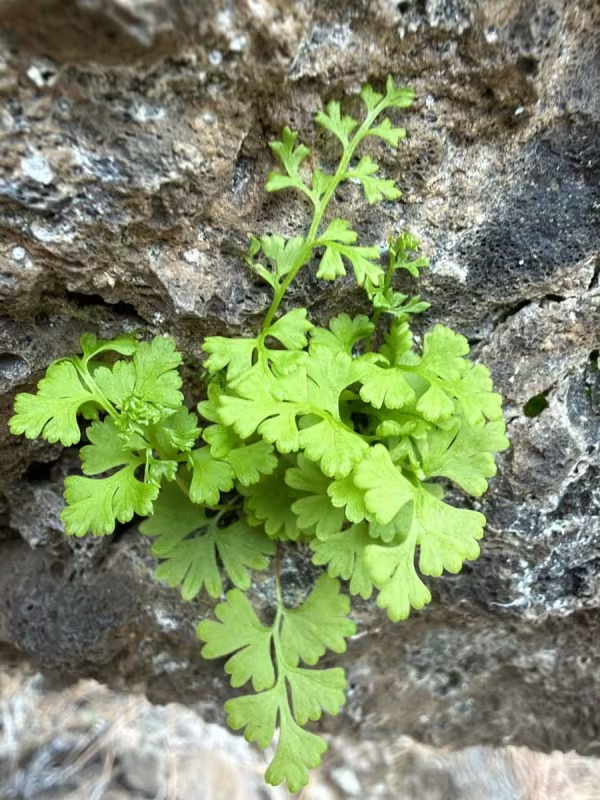
Anogramma leptophylla, commonly known as the Jersey fern, is a small and delicate plant belonging to the Pteridaceae family. It is distinct in the botanical world as one of the few annual ferns, completing its life cycle from spore to maturity within a single growing season.
The native distribution of this species spans across Mediterranean-type climates, extending into parts of Africa, the Americas, and Australia. It typically occupies sheltered niches, such as rock crevices and shaded banks, where environmental conditions remain relatively stable throughout its growth period.
Successful cultivation requires a loose, well-draining potting medium, often consisting of a mix of sand, leaf mold, and peat. The acidity levels should be kept slightly acidic to neutral to ensure the healthy development of both the sporophyte and the gametophyte stages.
Temperature and humidity control are critical for this species. It thrives in cool to moderate temperatures, typically between 15°C and 20°C, and requires high atmospheric humidity. It is sensitive to rapid changes and extreme drought, which can lead to quick wilting of its fine foliage.
This fern is highly valued by enthusiasts for its delicate, lacy appearance. Due to its size and moisture requirements, it is ideally suited for terrariums, bottle gardens, or specialized conservatory environments where high humidity can be maintained without constant fluctuations.
Main diseases and pests
The Jersey fern is prone to several fungal issues, primarily triggered by poor air circulation and waterlogged soil conditions. Root rot is the most common cause of mortality in greenhouse cultivation.
Pests such as fungus gnats and spider mites present a significant threat to the plant's health. While fungus gnats thrive in moist soil and damage roots, spider mites attack the fragile leaves during periods of low humidity.
Preventative measures include using sterile soil mixtures and maintaining proper distance between plants to facilitate airflow. Regular monitoring of the foliage is essential to detect early signs of pest infestation or disease outbreaks.
Cultural control involves adjusting the watering regime and ensuring that the foliage stays dry to avoid bacterial and fungal leaf spots. Proper sanitation in the growing area is crucial for long-term plant health.
Chemical treatments should be used sparingly and only after verifying the plant's sensitivity to specific active ingredients. Many fern species are sensitive to certain pesticides, so localized testing on a small leaf area is always recommended.