
Andesanthus lepidotus
Andesanthus lepidotus
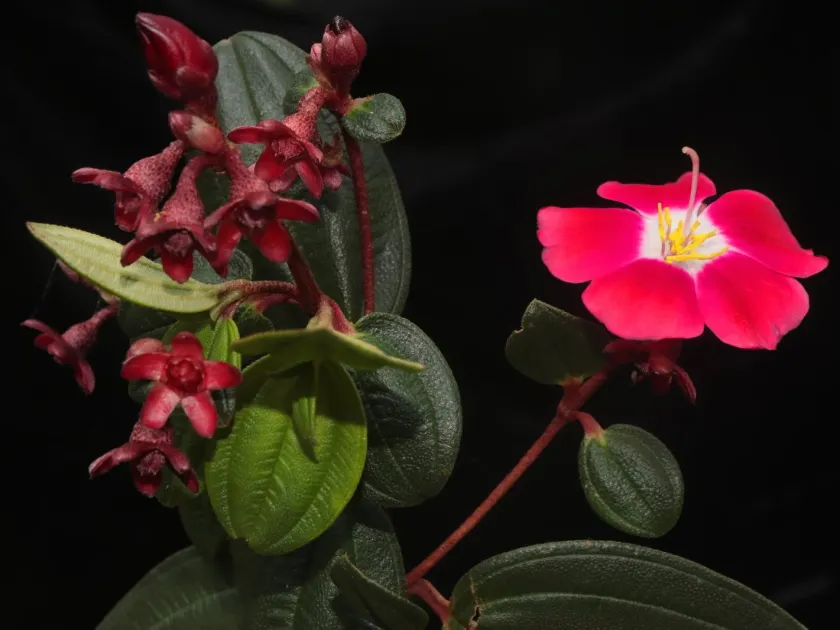
Description
Sowing dates
Andesanthus lepidotus, a member of the Melastomataceae family, is a woody plant native to the high-altitude tropical forests of the Andes. Its natural propagation relies on moist, humus-rich forest floor environments where seeds germinate after the rainy season.
In a controlled cultivation setting, seeds should be sown in a high-organic substrate. Precise temperature control is required to mimic the cool yet humid environment of the Andean cloud forests, which is essential for successful germination.
The optimal time for sowing is during the early spring when day length increases, providing the necessary photoperiod for seedling establishment and root development.
To improve germination uniformity, professionals often suggest a period of cold stratification, which helps break dormancy and ensures that seedlings emerge simultaneously.
Transplanting requires extreme care as the root system of Andesanthus lepidotus is highly sensitive to disruption. It is advisable to move plants into larger containers only when the root ball is well-formed.
Growing requirements
The plant requires a specific climate characterized by cool temperatures and consistently high humidity. Direct sunlight can cause significant leaf damage, so filtered light or partial shade is highly recommended.
Soils must be acidic, well-draining, and rich in organic matter. A mixture containing peat, pine bark, and leaf mold creates the ideal physical structure to support healthy root respiration.
Irrigation management is critical; the substrate should remain moist to the touch but never waterlogged. Poor drainage can lead to rapid root decay, which is often fatal for the plant.
Use only soft or distilled water for irrigation, as minerals in tap water can alter the soil pH over time, which may cause nutrient deficiencies and inhibit plant growth.
Nutrient supplementation should be done using fertilizers designed for acid-loving plants. Avoid high-calcium additives that can neutralize the acidity of the soil medium.
Main diseases and pests
Common pests affecting this species include spider mites, which thrive in low-humidity environments, and mealybugs, which often infest the stems and leaf undersides.
Fungal diseases are a major concern when air circulation is inadequate or humidity remains stagnant for extended periods, leading to conditions like powdery mildew or root rot.
Preventive measures include maintaining good airflow around the plants and performing regular inspections to catch pest infestations before they spread across the entire canopy.
- Apply systemic insecticides immediately upon detecting mite or scale presence.
- Ensure that the drainage system is functioning to prevent water stagnation.
- Use fungicide applications if leaf spotting or signs of mildew are identified.
Infected plant parts must be pruned and discarded in a sealed container to prevent the spread of spores, and tools should be sterilized after every maintenance session.