
Anarthria gracilis
Anarthria gracilis
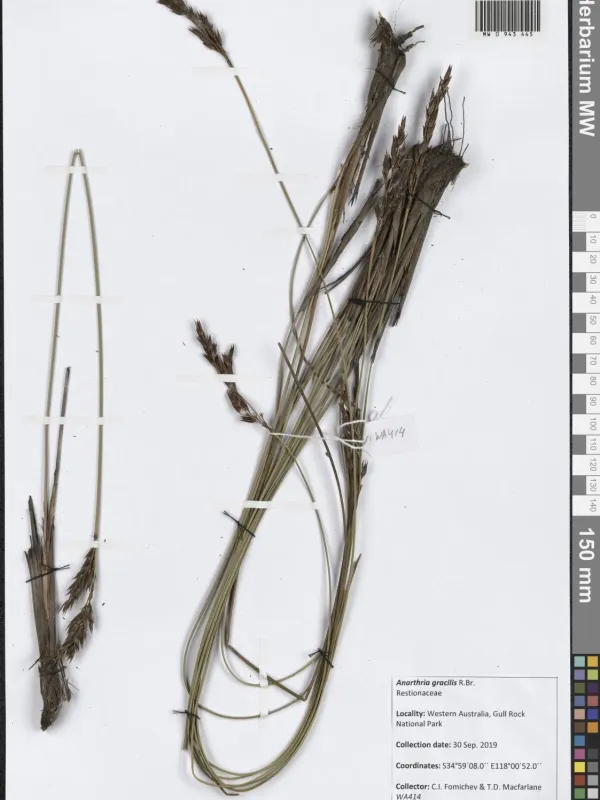
Description
Growing requirements
Anarthria gracilis is a specialized herbaceous perennial species belonging to the Anarthriaceae family. This plant is endemic to the southwestern regions of Western Australia, having evolved to thrive in nutrient-poor sandy soils typical of this unique ecosystem.
The plant exhibits distinctive morphological features, with rigid, erect stems that provide structural stability against strong winds. Its growth habit is often compared to members of the Cyperaceae family, though it possesses unique evolutionary characteristics that define its specific genus.
The environmental requirements for this plant focus on high light availability and excellent soil drainage. It is highly sensitive to waterlogging, necessitating well-aerated substrates that mimic its natural habitat to prevent root rot and physiological stress.
As a xerophytic plant, it shows remarkable resilience to prolonged drought conditions. Its internal physiological mechanisms allow it to maintain metabolic stability even when water availability is severely restricted for extended periods during the growing season.
In terms of agricultural and horticultural use, Anarthria gracilis is primarily appreciated for its role in specialized native landscapes and biodiversity preservation efforts. Research continues to investigate its potential in land restoration projects and as a low-maintenance ornamental species in dry climates.