
Aloe niebuhriana
Aloe niebuhriana
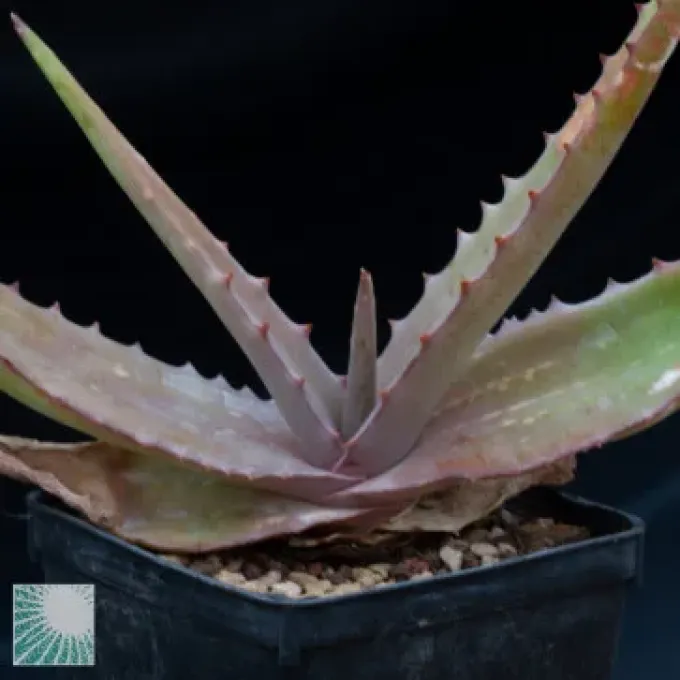
Description
Growing requirements
Aloe niebuhriana is a rare succulent species belonging to the Asphodelaceae family. Native to the arid regions of the Arabian Peninsula, particularly Yemen, this plant is naturally adapted to rocky terrain and extreme environmental fluctuations typical of desert landscapes.
Botanically, it is characterized by a compact rosette of succulent leaves. These leaves act as water storage organs, enabling the plant to withstand prolonged drought conditions while maintaining cellular integrity under intense solar radiation.
For successful agricultural or horticultural cultivation, soil drainage is the most critical factor. The planting medium must consist of a coarse, rocky substrate with minimal organic matter to prevent root rot, which is the primary cause of failure in this species.
Light requirements are very high, as the plant demands direct sun exposure to maintain its characteristic compact form and coloration. Inadequate lighting results in etiolation, where the plant grows weak and becomes significantly more prone to physiological disorders.
The irrigation strategy should mimic the sporadic rain cycles of its native habitat. Watering must only occur when the soil is completely dry, and in winter, the plant enters a dormant phase requiring virtually no water to sustain its health.
Main diseases and pests
The most significant threat to Aloe niebuhriana is root rot caused by stagnant moisture in the root zone, often resulting from poor soil porosity or excessive watering frequency.
Pest management is essential, with mealybugs and spider mites being the most frequent invaders. These pests thrive in dry conditions and can quickly colonize the delicate spaces between the leaves, draining the plant's moisture reserves.
Proactive care involves maintaining excellent airflow around the plant. Stagnant air environments increase the risk of powdery mildew and other surface fungal pathogens that mar the plant's aesthetic and health.
When chemical treatment is required, it is imperative to use products specifically formulated for succulents, as high concentrations of standard fertilizers or pesticides can cause phytotoxicity on the waxy cuticle of the leaves.
Integrated pest management should prioritize manual removal of pests in the early stages, combined with proper adjustment of the microclimate to ensure the plant remains in a state of high physiological resistance.