
Aloe calcairophila
Aloe calcairophila
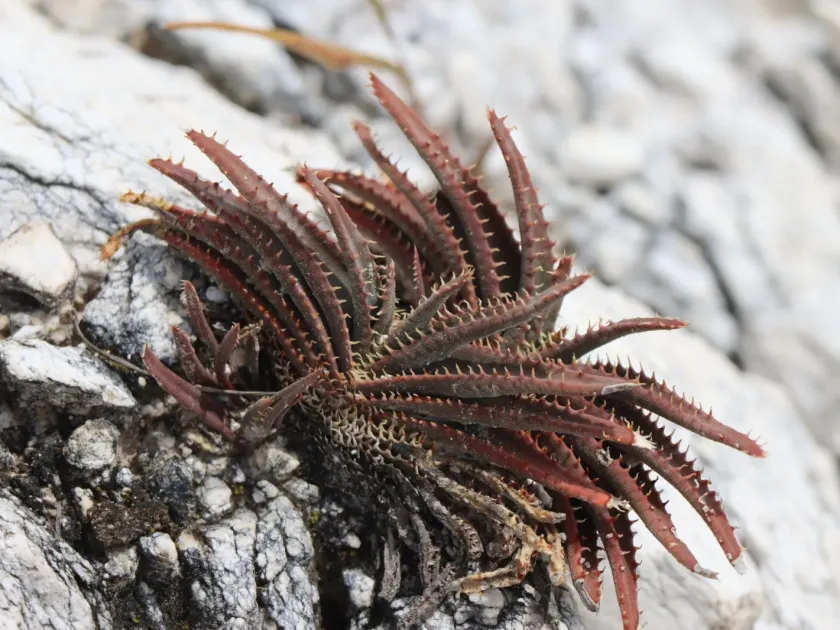
Description
Growing requirements
Aloe calcairophila is a distinct species of succulent belonging to the Asphodelaceae family. Native to the central regions of Madagascar, this plant is specifically adapted to grow on limestone outcrops, which dictates its preference for mineral-rich and well-draining substrates.
Botanically, it is a dwarf succulent forming tight, compact rosettes of grey-green leaves. The leaf surfaces are often adorned with subtle markings or spots, serving as natural camouflage in its rugged native habitat, and the leaves have a firm, fleshy texture typical of water-storing plants.
To cultivate this species successfully, one must provide high-intensity sunlight throughout the day. It thrives in locations where it can receive direct light, which helps maintain the plant's compact form and prevents etiolation, which is a common issue in lower light settings.
The soil requirements are strict: the medium must be highly porous and inorganic. A mixture consisting of coarse pumice, perlite, and a small amount of sandy loam is ideal. Adequate drainage at the base of the container is mandatory to prevent the accumulation of moisture near the root neck.
In terms of хозяйственное (economic/use) application, this species is primarily valued in the niche market of succulent collectors and botanical garden displays. Due to its slow growth rate and limited natural range, it remains a sought-after rarity rather than a mass-produced agricultural crop.
Main diseases and pests
The most significant threat to Aloe calcairophila is root rot, which typically occurs due to poor soil drainage or excessive watering during the dormant winter months. Constant moisture leads to rapid decay of the succulent's root system, which is often irreversible.
Common pests include the mealybug, which tends to hide within the tight spaces of the rosette, and the root mealybug, which attacks the subterranean parts of the plant. These pests feed on the cell sap, significantly weakening the individual plant.
Managing these threats requires a combination of vigilance and precise maintenance. Regular inspections of the leaf axils are essential. If infestations are detected, localized treatment with horticultural soaps or systemic pesticides is recommended, keeping in mind the plant's sensitivity to chemicals.
Preventative care involves ensuring a dry environment during the resting season and strictly limiting water intake. Promoting airflow around the plant helps reduce the risk of fungal infections that thrive in stagnant, humid environments.
Proper hygiene, such as using clean, sterilized tools for any necessary maintenance or potting, is crucial. Since the plant grows slowly, any physical damage or disease infection can take significant time to heal, making prevention the best strategy for long-term health.