
Allionia incarnata
Allionia incarnata
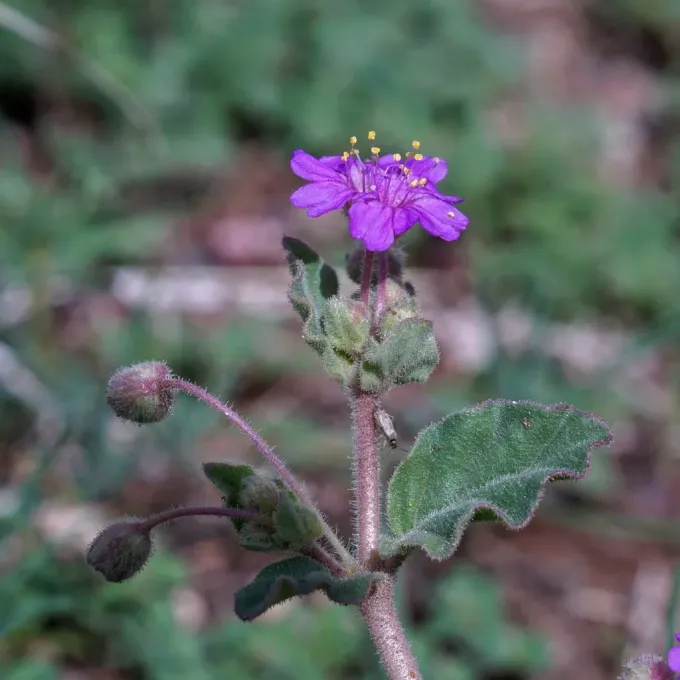
Description
Sowing dates
Allionia incarnata, commonly known as Trailing Four O'Clock, belongs to the Nyctaginaceae family and is a sprawling, perennial herb. The sowing process for this species typically occurs in the spring, once the soil has warmed sufficiently to support germination.
For optimal results, seeds require cold stratification to simulate their native environmental conditions. A well-draining, loose substrate is necessary to ensure the seeds do not suffer from moisture-related decay during the sprouting phase.
Seeds should be planted at a shallow depth of approximately 1 to 1.5 centimeters. Given the plant's natural tendency to spread across the ground, spacing should be carefully calculated to avoid overcrowding in the cultivation plot.
In regions with shorter growing seasons or cooler climates, starting plants in a protected environment or greenhouse is recommended. This allows for the development of a strong root system before transplanting to the field.
Germination usually takes between two to four weeks when the temperature remains between 20–22 degrees Celsius. During this early growth phase, maintaining consistent but not excessive soil moisture is crucial for the survival of the seedlings.
Growing requirements
As a specialized xerophyte, Allionia incarnata originates from the arid landscapes of the Americas. It is evolutionarily adapted to thrive in harsh, dry environments where moisture availability is limited throughout the year.
The ideal soil profile consists of sandy, rocky, or gravelly substrates with a neutral to slightly alkaline pH. The plant cannot tolerate poorly drained or heavy clay soils, which promote root rot and lead to rapid decline.
Maximum solar exposure is a fundamental requirement for this species. When placed in shaded areas, the plant becomes leggy and loses its characteristic low-profile, carpet-like growth habit, which is its primary defense against wind and evaporation.
It possesses an impressive tolerance to extreme heat and prolonged drought due to its deep taproot system. These traits make it an excellent candidate for agricultural applications in semi-arid environments where irrigation is scarce.
Agronomic management should focus on preserving soil aeration. Avoid the use of heavy mulches that retain too much surface humidity near the crown of the plant, as this creates an environment conducive to pathogens.
Main diseases and pests
Allionia incarnata is notably resistant to most common agricultural pests. Its physical structure and chemical composition make it an undesirable host for many insects, resulting in low maintenance requirements regarding pest control.
The primary threats are fungal pathogens, specifically those that manifest in waterlogged or overly humid conditions. These diseases typically attack the root system first, eventually causing the plant to wither and collapse.
To prevent disease outbreaks, cultivators must ensure proper spacing for airflow and strictly control the irrigation schedule. If chemical intervention becomes necessary due to extreme conditions, fungicides should be used sparingly.
Weed competition is the most significant threat to young plants. During the establishment phase, manual weeding is necessary to prevent nearby grasses and broadleaf weeds from outcompeting the slow-growing Allionia for nutrients and sunlight.
Due to its high level of hardiness, the plant rarely requires systematic pesticide application. This biological robustness supports its use in low-input agricultural systems, reducing the overall environmental impact of its cultivation.