
Allardia glabra
Allardia glabra
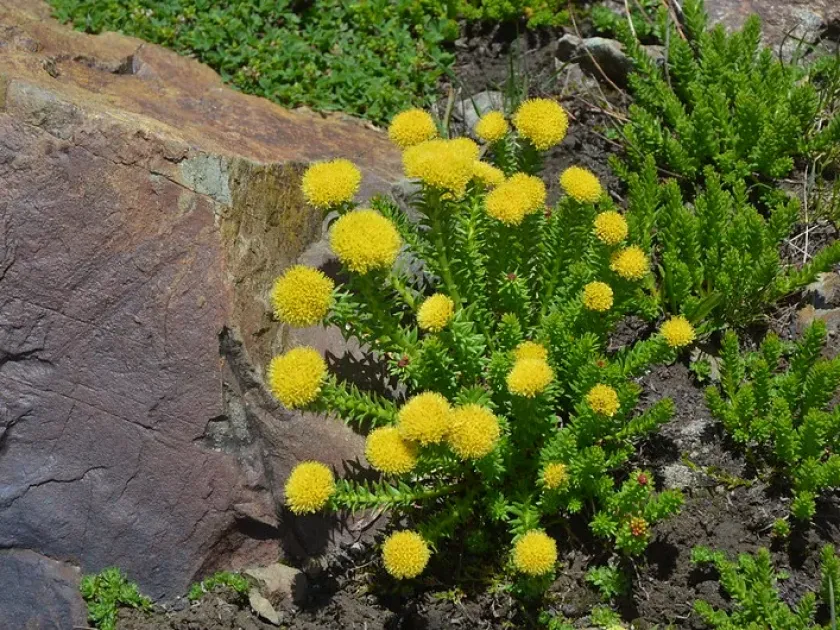
Description
Sowing dates
Allardia glabra is an alpine perennial that thrives under conditions mimicking its natural mountain habitat. Seeds require a cold stratification period to break dormancy successfully.
The best time for sowing is late autumn, allowing the seeds to experience winter temperatures. This triggers the biological mechanisms necessary for uniform germination in early spring.
Seeds should be sown on the surface of a grit-based substrate. They are light-dependent, so covering them with a thick layer of soil will inhibit their ability to sprout.
In spring, keeping the substrate consistently moist but not waterlogged is essential for the survival of the newly emerged seedlings, which are quite fragile in their initial growth phase.
Vegetative propagation can be achieved by dividing established clumps. This operation should be performed early in the season, ensuring each section has a healthy root system to establish quickly.
Growing requirements
As a member of the Asteraceae family, this species is adapted to rocky, high-altitude environments. It requires a substrate with excellent drainage and a low organic matter content.
Successful cultivation relies on providing a cool root run and protection from the intense heat of lowland summers, which can be fatal for alpine species if not managed correctly.
Allardia glabra demands high light levels. While it enjoys full sun, providing afternoon shade in warmer regions can prevent heat stress and desiccation of the leaves.
The soil pH should be neutral to slightly alkaline. The use of heavy fertilizers is strongly discouraged, as this plant has evolved to survive in nutrient-poor alpine soils.
The plant is extremely hardy regarding cold, easily withstanding freezing winter temperatures, provided that the soil is not saturated with water, which leads to root damage.
Yield
The harvest potential of Allardia glabra is primarily focused on small-scale specialized production, often for botanical or medicinal research purposes rather than mass agriculture.
Yield is measured by the biomass of the foliage and the count of floral heads per season. Proper light and temperature conditions are the primary drivers of consistent production.
For medicinal use, harvesting is recommended at the peak of the flowering stage, ensuring that the plant is handled gently to preserve its volatile chemical profile.
Post-harvest processing involves rapid, low-temperature drying in a shaded, well-ventilated environment to maintain the integrity of the plant's active compounds.
Regular monitoring of plant vigor is necessary to ensure consistent yields; older plants may need to be divided to maintain peak health and productivity levels.
Main diseases and pests
Root rot is the most significant threat to Allardia glabra, usually caused by improper soil composition that retains too much moisture around the crown of the plant.
Fungal pathogens can manifest as leaf spots or mildew when the airflow is restricted. Planting at correct densities is crucial to prevent the spread of these issues.
Insect pests, including aphids and mites, may occasionally attack the plant, particularly if it is weakened by environmental stress or suboptimal placement in the garden.
Physical damage to the foliage during maintenance can create entry points for pathogens, so delicate handling is required when removing senescent leaves.
Preventative measures include regular inspection and the removal of organic debris from around the base to keep the area clear and reduce fungal habitat.