
Common corncockle
Agrostemma githago L.
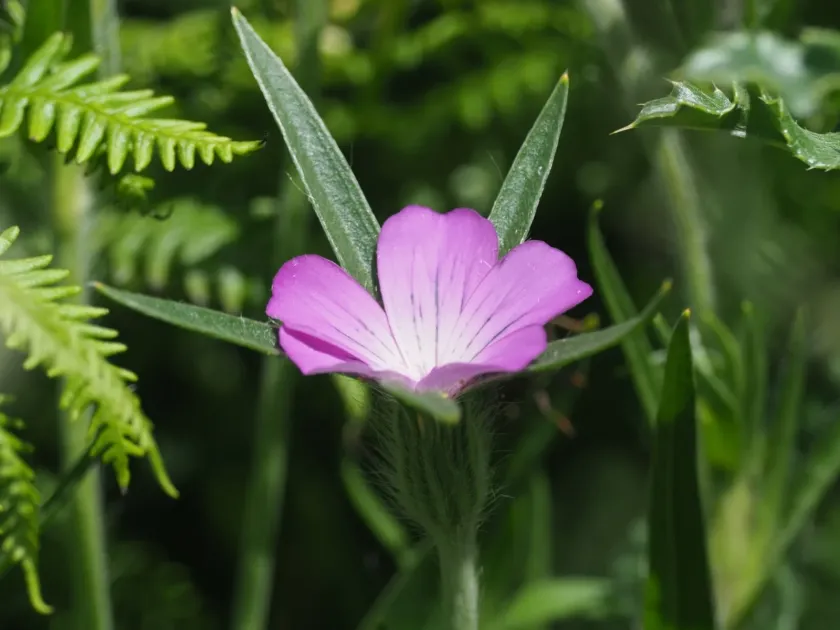
Description
Sowing dates
Common corncockle is an annual herbaceous plant that historically grew as a companion to cereal crops. Its seeds typically germinate in autumn or early spring, aligning its life cycle with the sowing schedules of winter wheat or rye.
The plant belongs to the Caryophyllaceae family and is known for producing a large number of seeds. These seeds can remain dormant and viable in the soil for several years, creating a persistent soil seed bank that challenges farmers.
Germination occurs at relatively low temperatures, often starting as soon as the soil begins to warm in the spring. The seeds are capable of emerging from various depths, although a shallow burial usually promotes the most uniform and rapid emergence.
Growth is typically robust during the cool spring weather, allowing the plant to establish a deep taproot before the onset of summer. This rapid development helps it compete effectively against the surrounding cereal crops for soil nutrients.
The life cycle concludes with flowering and seed set occurring in early to mid-summer. The timing of seed maturation often coincides with the ripening of cereal grains, which previously led to the contamination of harvest yields.
Growing requirements
Corncockle prefers well-drained, fertile soils such as loams or sandy loams. It has evolved to thrive in environments with regular agricultural disturbance, making it a classic specialist of cereal-growing regions.
The plant requires ample sunlight to reach its full size and produce a maximum seed count. It does not perform well in shaded conditions, which is why it often targets the edges of fields or areas with poor crop establishment.
Climate-wise, it is adapted to temperate regions. While it is quite hardy, it relies on sufficient moisture during the spring months to support vegetative growth, and it is sensitive to severe, prolonged drought during its flowering stage.
From an agronomic perspective, the most effective control involves rigorous seed cleaning. Because the seeds of Agrostemma githago are similar in size to wheat grains, specialized sieving and gravity separation are required to ensure high-quality, weed-free harvests.
Soil management practices, such as shallow tillage after harvest, can help trigger the germination of dormant seeds in the soil, allowing them to be subsequently controlled by herbicide application or secondary cultivation.
Main diseases and pests
The primary threat to Agrostemma githago in modern agriculture is the use of selective herbicides. It is highly susceptible to many broad-spectrum herbicides used for broad-leaved weed control in wheat, which has caused it to decline significantly in many areas.
While the plant can be subject to fungal diseases like powdery mildew, its natural defenses, including toxic saponins, make it highly resistant to most insect pests. These compounds are a defense mechanism that helps the plant survive in hostile environments.
Physical control measures remain a vital part of integrated pest management. Crop rotation is particularly effective, as shifting away from cereal crops for one or two seasons disrupts the life cycle of this annual weed.
Preventing the plant from going to seed is critical. If manual removal or spot spraying is practiced before the seed pods fully mature, the soil seed bank can be significantly depleted over a few years of consistent effort.
- Utilizing advanced optical sorting machines for grain cleaning
- Maintaining strict herbicide application protocols
- Implementing diverse crop rotations to interrupt growth cycles
- Monitoring field borders for early colonization
- Ensuring certified, weed-free seed usage for all cereal crops