
Kauri
Agathis australis (D. Don) Steud.
Description
Growing requirements
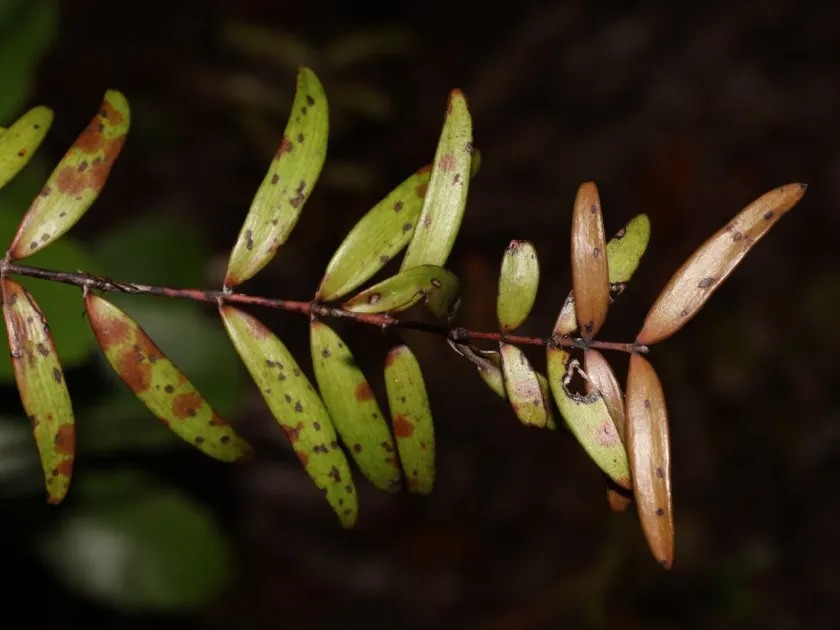
Agathis australis, commonly known as the Kauri, is a massive coniferous tree belonging to the Araucariaceae family. It is one of the world's most significant and ancient tree species, characterized by its impressive size and longevity.
The species is endemic to the North Island of New Zealand. It thrives in humid subtropical environments, requiring high annual rainfall and consistent temperatures to maintain its metabolic processes.
Ideal soil conditions for the Kauri involve well-drained, acidic substrates. The tree possesses a unique root architecture that requires excellent aeration, making heavy clay soils unsuitable without significant modification.
Kauri trees are remarkably shade-tolerant during their seedling stage, which allows them to establish in the understory. As they mature, they require full canopy exposure to sustain their rapid upward growth.
In terms of agricultural and forestry utility, the Kauri is prized for its straight-grained, high-quality timber. However, conservation efforts now prioritize the preservation of remaining stands over commercial harvesting.
Main diseases and pests
The primary threat to the survival of Agathis australis is Kauri dieback disease, caused by the water mold Phytophthora agathidicida. This pathogen destroys the tree's root system, leading to rapid decline.
The movement of soil contaminated with the pathogen is the main vector for the disease. Rigorous management practices, including boot cleaning stations and boardwalks, are implemented to protect healthy forests.
Various insect pests, including wood-boring beetles, can weaken the trees. While mature individuals have high natural resistance, stressed trees are significantly more susceptible to these infestations.
Climate instability, particularly severe drought, limits the tree's natural defense mechanisms. These environmental stressors increase vulnerability to opportunistic fungal infections in the bark and cambium.
Ongoing research focuses on developing resistant genotypes and implementing strict phytosanitary measures to ensure the species' longevity within its restricted ecological niche.