
Afzelia africana
Afzelia africana Sm. ex Pers.
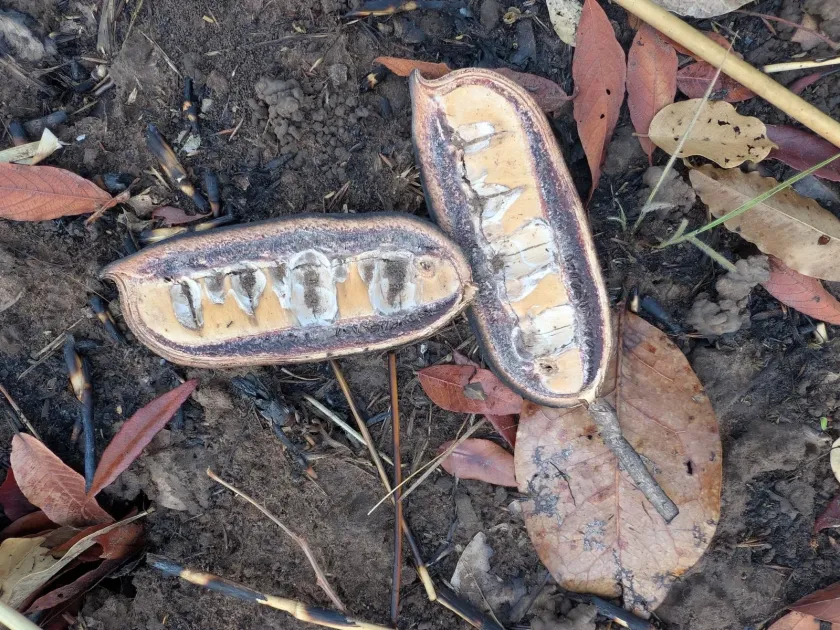
Description
Sowing dates
Propagation of Afzelia africana is primarily done through seeds, which require specific treatment due to their hard seed coat that hinders uniform germination.
Pre-sowing preparation involves mechanical scarification or soaking in water to break dormancy and ensure that the seeds absorb moisture effectively.
Sowing should ideally coincide with the onset of the rainy season to provide the seedlings with a consistent water supply during their most vulnerable stage.
Seedlings are typically grown in nurseries for several months until they are robust enough to withstand the environmental stressors of open-field planting.
Proper spacing is essential to ensure that the trees have sufficient space to develop their characteristic spreading canopy and deep root systems.
Growing requirements
Afzelia africana is a prominent member of the Fabaceae family, adapted to the environmental conditions of the African savanna and deciduous forests.
The tree thrives in well-drained, deep soils and exhibits poor tolerance for waterlogged areas, which can lead to rapid root decay and plant mortality.
As a heliophilous species, it requires high levels of solar radiation throughout the year, meaning it does not perform well under dense canopy shade.
Temperature requirements are consistent with tropical climates, typically ranging from 22 to 35 degrees Celsius, with tolerance for dry seasons once mature.
The ability of this species to fix nitrogen in the soil through symbiotic root associations makes it a valuable component in maintaining soil fertility.
Yield
The primary yield from this crop is high-quality timber, known for its density, durability, and resistance to environmental degradation and termites.
Beyond timber production, Afzelia africana serves as an essential source of forage for livestock, providing high-protein fodder during the dry season.
Seeds and bark are also harvested for traditional uses, including medicinal applications, reflecting the cultural and economic importance of the species.
Yield estimation in forestry depends on management practices, such as selective pruning to encourage straight bole development and maximize wood value.
Sustainable harvesting is crucial for maintaining yield, as the tree exhibits relatively slow growth rates compared to faster-maturing plantation species.
Main diseases and pests
The most immediate threat to saplings is grazing by domestic livestock, which can severely damage or destroy young trees before they establish.
Insect pests, particularly wood-boring beetles, present a significant risk to the economic value of the tree by damaging the structure of the timber.
Fungal pathogens can arise in poorly ventilated plantation settings, particularly when humidity levels remain excessively high for extended periods.
Environmental stress, such as extreme or prolonged drought, can leave trees susceptible to opportunistic diseases that weaken the plant structure.
Over-exploitation through indiscriminate logging remains a major concern, threatening the future of wild populations and reducing the available gene pool.