
Syngonium podophyllum
Syngonium podophyllum Schott
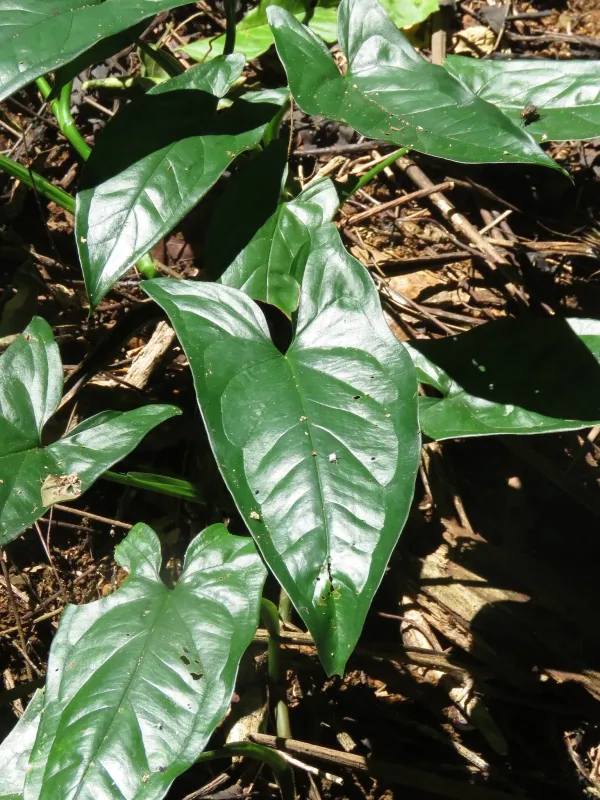
Description
Growing requirements
Syngonium podophyllum, commonly known as the arrowhead plant, belongs to the Araceae family. This perennial evergreen vine is native to the tropical rainforests of Central and South America.
The plant thrives in bright, indirect light. Direct sunlight can scorch its leaves, while low light conditions cause the stems to become leggy and lose their distinctive leaf shape.
Optimal growth requires a well-draining, nutrient-rich potting mix with an acidic to neutral pH. A common mixture includes peat moss, perlite, and pine bark to ensure aeration and prevent root compaction.
Temperature management is critical; the species prefers a range between +20 °C and +28 °C. It is sensitive to cold drafts and should be kept away from air conditioning vents during the winter months.
Consistent moisture is essential, but the substrate should be allowed to dry out slightly between waterings to prevent root rot, which is a major physiological threat to this crop.
Main diseases and pests
The primary threats to Syngonium podophyllum are soil-borne pathogens such as Pythium and Rhizoctonia, which thrive in waterlogged conditions and cause root decay.
Pest infestations are common when ambient humidity is insufficient. Spider mites are the most frequent problem, feeding on the undersides of leaves and leading to stippling and yellowing.
Mealybugs can cluster in the stems and leaf nodes, extracting sap and secreting honeydew, which promotes the growth of sooty mold on the foliage.
Thrips may occasionally infest the plant, causing silvering of leaves and significant tissue damage. Integrated pest management, including systemic insecticides and humidity control, is recommended.
- Monitor leaf undersides weekly.
- Avoid over-fertilizing with high-nitrogen formulas.
- Maintain air circulation to prevent fungal growth.
- Isolate new plants to prevent cross-contamination.
- Prune damaged foliage to improve plant vitality.