
Aegilops triuncialis
Aegilops triuncialis L.
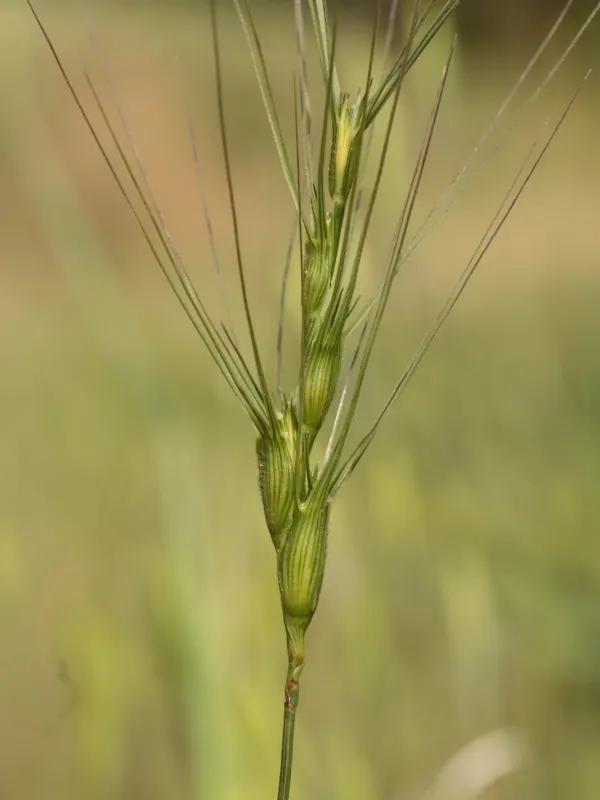
Description
Sowing dates
Aegilops triuncialis, commonly known as barbed goatgrass, is a winter annual grass that poses significant challenges to cereal crop production. Germination typically occurs during autumn, coinciding with the sowing season of winter wheat, allowing it to compete directly with crops.
Seeds can remain viable in the soil for several years, creating a persistent seed bank that requires long-term management. Early emergence gives this weed a competitive edge in capturing light and soil nutrients during the initial stages of crop establishment.
The development cycle of this plant is synchronized with many cereal crops, making it difficult to distinguish and remove manually during the early growth phases. The rapid phenological advancement ensures the weed reaches maturity even in fluctuating seasonal conditions.
Optimal germination conditions include temperatures ranging between 10 and 20 degrees Celsius with adequate soil moisture. The species is highly capable of establishing itself in fields where conventional sowing practices are employed.
Agronomic strategies such as stale seedbed techniques can be employed to induce germination prior to planting, followed by mechanical or chemical control to deplete the surface seed pool before the main crop is sown.
Growing requirements
Belonging to the Poaceae family, Aegilops triuncialis is known for its extreme environmental adaptability. It thrives in open, disturbed habitats and is particularly successful in arid and semi-arid regions where other vegetation struggles.
The plant exhibits remarkable tolerance to various soil types, including heavy clays, rocky substrates, and poor-quality soils with limited nutrient content. It is also highly resistant to drought and can survive in areas with minimal rainfall.
Botanically, the plant features spikelets with long, sharp, barbed awns. These structural adaptations are essential for its dispersal, as they allow seeds to cling to livestock fur, machinery, and clothing, facilitating rapid spread across landscapes.
Its ability to withstand varying pH levels and soil salinity levels makes it a formidable colonizer of degraded agricultural lands. The plant's architecture allows it to maintain structural integrity under high wind speeds and harsh weather conditions.
Effective management requires controlling infestations along field edges, roadsides, and unmanaged buffer zones to prevent the encroachment of wind-blown seeds into high-value agricultural fields.
Main diseases and pests
The primary threat of barbed goatgrass is its aggressive competition with wheat, which can lead to significant yield losses. By outcompeting crops for water and nitrogen, it drastically reduces the overall economic productivity of the infested land.
This grass acts as an alternate host for several cereal pathogens, including rusts and powdery mildew. These diseases can easily jump from the wild grass to commercial crops, complicating integrated pest management programs.
Insect pests, such as grass bugs and aphids, utilize Aegilops triuncialis as a refuge and feeding ground throughout the season. This increases the total insect pressure on nearby wheat fields, often requiring additional chemical interventions.
Due to its close genetic relationship with wheat, chemical control within a standing cereal crop is highly restricted. Most efforts must focus on preventive measures, including crop rotation and pre-planting herbicides.
- Utilizing certified weed-free seeds for planting.
- Implementing diversified crop rotations to disrupt the life cycle.
- Strategic use of non-selective herbicides before crop emergence.
- Manual removal and destruction of seed heads before they become brittle.