
Adenolobus garipensis
Adenolobus garipensis
Description
Growing requirements
Adenolobus garipensis is a woody shrub belonging to the Fabaceae family. Native to the arid regions along the Orange River in southern Africa, it has evolved to thrive in some of the most challenging environments on the planet.
The plant is highly specialized for semi-desert conditions, showing exceptional resistance to extreme temperatures and prolonged water scarcity. Its ability to extract nutrients from poor, rocky substrates makes it a candidate for challenging landscape restoration projects.
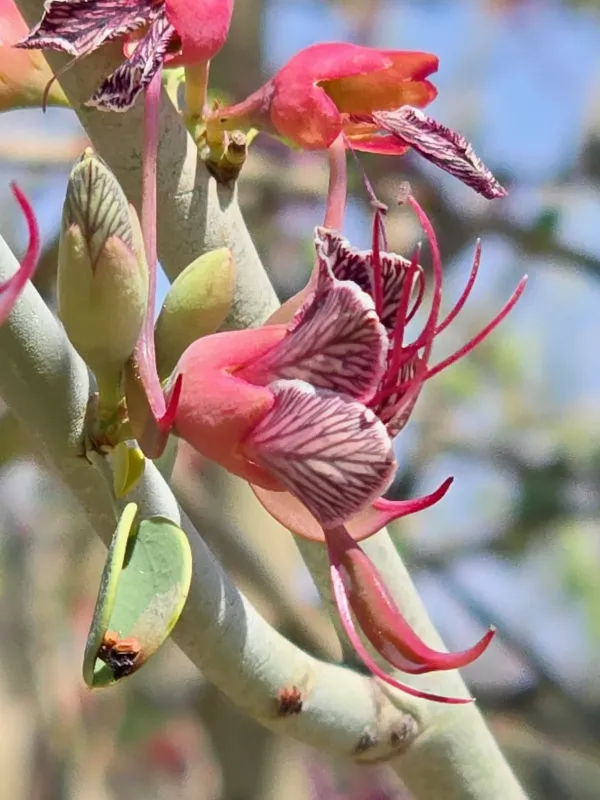
Botanically, it is recognized for its unique, deeply bilobed leaves that resemble an open book. This structural adaptation, combined with a deep taproot system, allows the plant to sustain itself when most vegetation succumbs to drought.
Agricultural cultivation requires specific attention to soil aeration and drainage. It cannot tolerate heavy or waterlogged soils, as these conditions rapidly promote root rot and physiological stress, eventually leading to plant death.
In terms of husbandry, the focus is on maintaining its natural hardiness. Minimal intervention is usually preferred, as the species is sensitive to synthetic fertilizers that can alter the delicate soil chemistry it relies on in its native habitat.
Main diseases and pests
The primary threat to the stability of this crop is root rot (Phytophthora or Pythium species), often triggered by improper irrigation scheduling or poor drainage in the planting site.
Aphids are frequent pests that colonize tender new growth, potentially acting as vectors for viral diseases, which necessitates constant monitoring during the growing season.
Weevil infestations can cause significant damage to the plant tissue and reproductive organs, impacting the overall health and propagation capacity of the shrub.
In humid microclimates, powdery mildew can become a significant challenge, requiring prompt treatment and improved airflow to prevent spreading across the population.
Competition from aggressive opportunistic weeds can overwhelm young specimens, making regular mechanical weeding a necessary practice during the establishment phase of the plantation.