
Actinobole uliginosum
Actinobole uliginosum
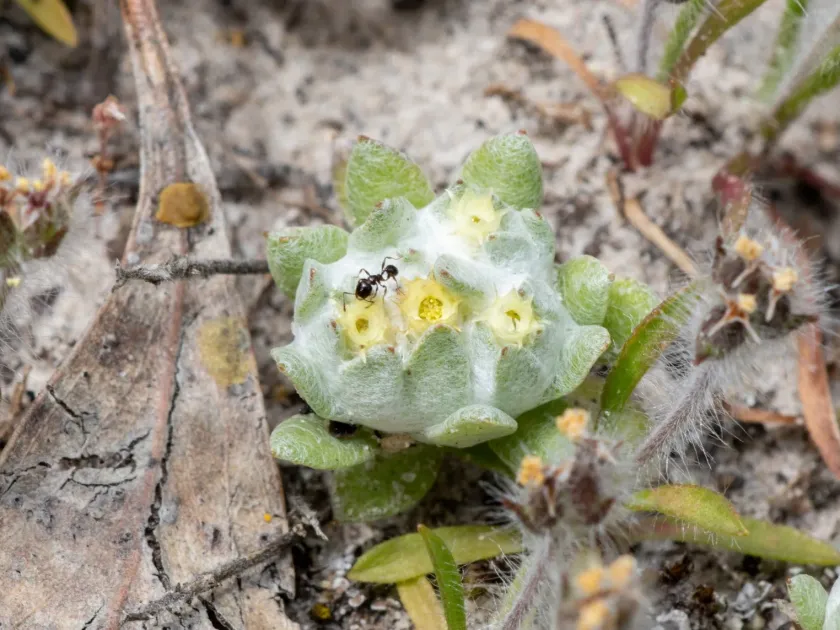
Description
Sowing dates
Actinobole uliginosum, commonly known as cottony actinobole, is a member of the Asteraceae family native to the arid and semi-arid regions of Australia.
The plant is typically classified as a ephemeral species, completing its entire growth cycle in response to favorable rainfall conditions in its natural habitat.
Propagation occurs through seeds which exhibit significant soil seed bank longevity, allowing the species to persist through years of extreme drought.
In natural ecosystems, germination is triggered by cooling temperatures combined with significant moisture infiltration into the sandy substrate.
The plant typically completes its flowering and seed-setting phases before the onset of the intense heat of the Australian summer season.
Growing requirements
This species thrives in well-drained sandy or loamy soils, showing a remarkable ability to colonize areas with high salinity levels in the soil profile.
Actinobole uliginosum is an obligate heliophyte, requiring full sun exposure to maintain its metabolic functions and produce sufficient biomass.
The climate requirement is characterized by a preference for Mediterranean-type regimes where winters are cool and moist, facilitating rapid vegetative development.
While not a traditional industrial crop, its role in preventing soil erosion in arid zones is significant due to its dense mat-forming growth habit.
Minimal fertilization is required for growth, as the species is well-adapted to the nutrient-poor soils typically found in its native Australian landscape.