
Acrachne racemosa
Acrachne racemosa
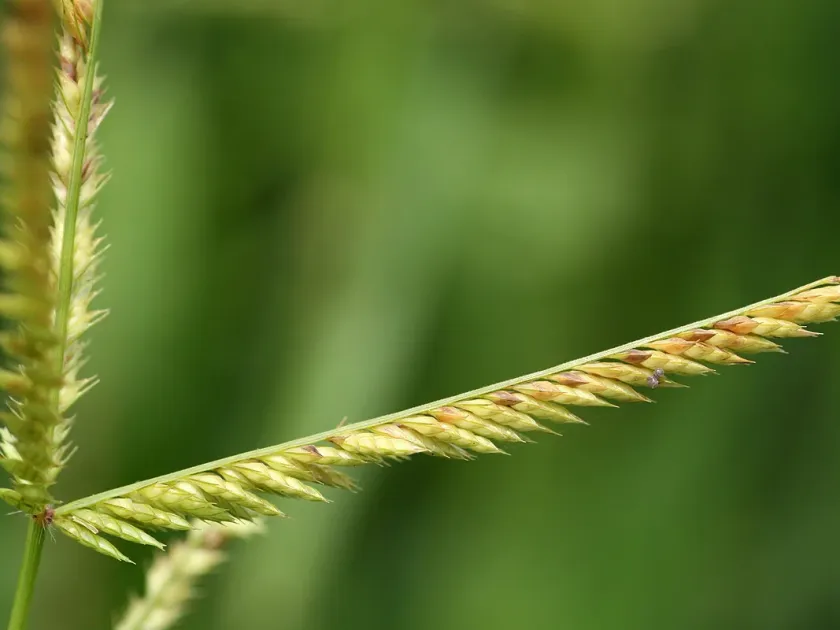
Description
Sowing dates
Acrachne racemosa is a heat-loving annual plant, and sowing times are determined by soil temperature, which must be sufficiently warm. The optimal planting period is late spring when soil temperatures reach 18-20 degrees Celsius to ensure rapid germination.
Seeds are small, so they should be sown at a shallow depth of no more than 1-2 centimeters. In tropical or subtropical climates, planting often coincides with the beginning of the rainy season, allowing the plant to leverage moisture effectively for rapid biomass development.
When used as a pasture crop, sowing is typically done in rows with spacing of up to 30 centimeters. This provides sufficient room for the plant to tiller and form strong rosettes of leaves and stems during its active growing phase.
Seeding rates depend on the intended use of the land and seed quality. It is important to note that the plant has a high potential for self-seeding, which allows for the adjustment of plant density over subsequent years without additional seeding operations.
In arid regions, it is crucial to synchronize sowing with favorable moisture windows to ensure that the plant's maximum water consumption phase does not fall during severe droughts.
Growing requirements
Acrachne racemosa, a member of the Poaceae family, is a highly resilient species adapted to various soil types, including loams and sandy soils. The plant exhibits significant tolerance to short-term drought due to its deep and well-developed root system.
The crop requires intense sunlight for optimal development, as it does not tolerate shading and tends to perform poorly under low-light conditions. It is a classic representative of tropical and subtropical flora that thrives in heat.
The crop has moderate soil fertility requirements but is highly responsive to nitrogen fertilizers, which stimulate the growth of vegetative mass. It thrives in soils with a neutral pH, though it is tolerant to minor deviations in acidity.
Temperature is a key factor for development. The plant prefers hot climates and grows rapidly at temperatures above 25 degrees, demonstrating metabolic peaks during the hottest summer months when other crops might enter dormancy.
Given its morphology, the plant can withstand temporary waterlogging, making it a viable candidate for land with poor drainage where other cereal crops might fail due to root rot.
Yield
The yield of Acrachne racemosa depends on the availability of water and nutrients during the active growth period. Under favorable conditions, the plant is capable of producing a significant amount of green biomass in a relatively short timeframe.
Maximum productivity is achieved through regular mowing, which encourages the regrowth of lateral shoots. The biomass yield potential can reach several tons per hectare when managed with appropriate agricultural practices.
The nutritional quality of the forage is characterized by a high fiber content, which is beneficial for the diet of ruminants. However, it is important to harvest before the flowering and seed-setting stages, as nutritional value may decrease as plants mature and lignify.
In pasture systems, yield is assessed based on the crop's ability to regenerate after grazing. Acrachne shows excellent recovery capabilities provided that grazing height does not damage the plant's primary growth points.
For seed production, plants are left to mature, and yields are dependent on the uniformity of the panicles and the weather conditions during the grain-filling stage.
Main diseases and pests
Acrachne racemosa features high biological resistance to most common diseases associated with cultivated grasses. This inherent robustness is a result of its wild origin and adaptation to harsh environments.
However, under conditions of high humidity and dense planting, fungal diseases such as leaf rust or powdery mildew may occur. These infections are typically localized and rarely lead to complete crop failure.
Pests such as grass aphids or various caterpillars may feed on young shoots, but economic damage rarely exceeds the threshold of concern. The plant's natural resistance minimizes the need for chemical pest control.
Early-stage weed competition can be a challenge, so initial weed control is essential for establishing a healthy stand. Once established, the crop is highly competitive and tends to suppress most weed growth.
Proper crop rotation and avoiding soil compaction help prevent secondary issues related to root health, preserving the productivity of the stand over several growing seasons.
Harvesting
Harvesting Acrachne racemosa for hay is best performed before flowering or at the early heading stage to maintain an optimal balance between protein and fiber. Standard forage harvesting equipment is typically used.
When producing hay, it is vital to ensure rapid drying of the cut mass, as the plant's dense foliage can slow down moisture loss. Using turners to aerate the windrows is recommended for uniform drying.
For seed collection, harvesting is carried out when the panicles darken and the seeds reach physiological maturity. Moisture control during this stage is necessary to prevent excessive shattering and seed loss during mechanical operations.
In grazing scenarios, the start of usage is determined by the stand reaching a height of 20-25 centimeters. This ensures sufficient biomass intake for livestock without causing long-term damage to the plant population.
After the harvest or grazing cycle, it is recommended to clear the field of debris if replanting or fertilization is planned to stimulate vigorous growth for the next season.