
How to Choose a Ball Valve for Irrigation and Irrigation Systems in the Agricultural Sector
Irrigation and irrigation systems in the agricultural industry impose special requirements on pipeline fittings. The correct selection of equipment depends on the reliability of water supply, minimization of losses, and operational costs.
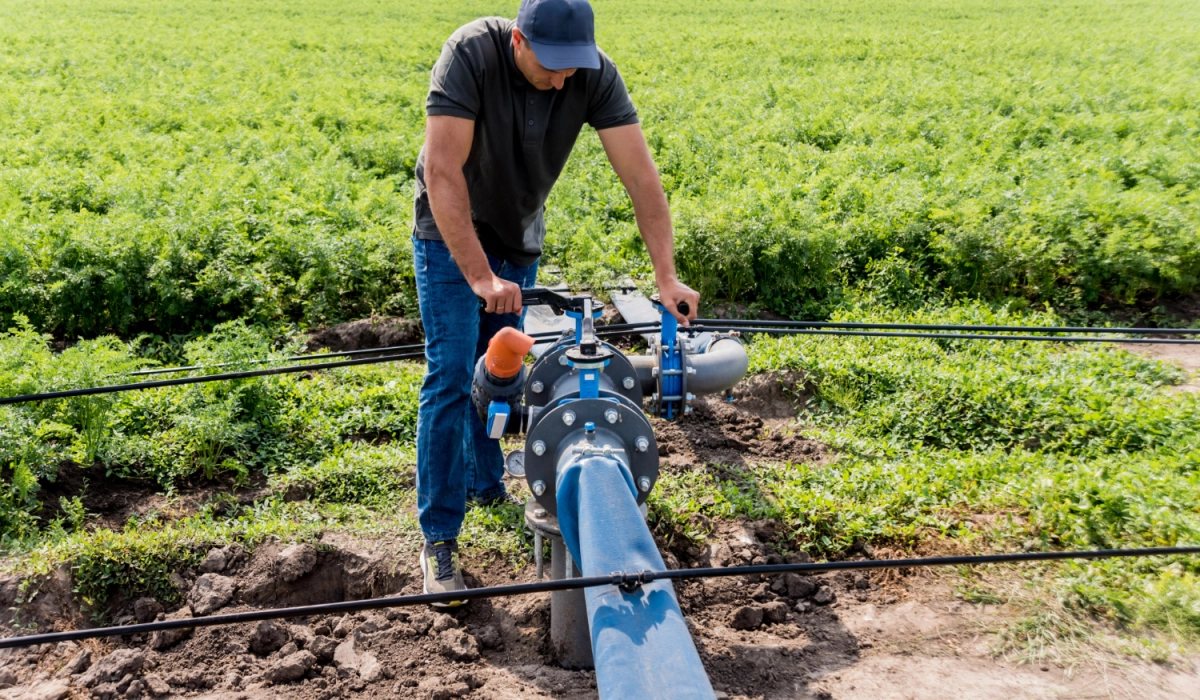
Irrigation and irrigation systems in the agricultural industry impose special requirements on pipeline fittings. The correct selection of equipment depends on the reliability of water supply, minimization of losses, and operational costs. One of the most in-demand solutions remains ball valve — a universal type of shut-off valve suitable for most agricultural tasks.
Key Selection Parameters
When selecting a ball valve for the agricultural sector, it is recommended to consider:
Type of working medium
Water (clean, technical), fertilizer solutions, aggressive liquids.
Pipe diameter and nominal bore
Correspondence of pipe and valve diameter to ensure required flow rate.
Maximum pressure and temperature
It is important to know the system parameters: operating pressure, temperature of water or solution.
Body material
For agricultural facilities, brass, steel, stainless steel, and plastic valves are suitable — the choice depends on the composition of the working medium and budget.
Connection type
Flanged — for large-diameter mains; threaded — for local systems; welded — for permanent engineering installations.
Operation Characteristics in Agriculture
The ball valve must meet certain operational characteristics:
Moisture resistance
The valve installed outdoors must be protected against corrosion (preferably choose stainless steel or special coatings).
Resistance to contaminated media
Irrigation water may contain sand, sludge, fertilizer residues — choose valves with reinforced seals and minimal clearance between the ball and body.
Easy installation and maintenance
Quick disassembly, possibility of cleaning and replacing seals without dismantling the entire system.
Sealing
High sealing is crucial for automatic irrigation systems — this prevents pressure drop and water loss.
Advice on Selecting Ball Valves for Irrigation Systems
When equipping farms and agricultural facilities, pay attention to the following criteria:
- Buy valves with pressure reserve — at least 20% higher than operating pressure.
- For fertilizer solutions, use models with PTFE or fluoroplastic seals.
- For large farms, choose valves with automation capability (electric or pneumatic actuators).
- Pay attention to the manufacturer and presence of quality certificates.
- For seasonal systems, prefer disassemblable models — they are easier to conserve for winter.
Types of Ball Valves Used in the Agricultural Sector
Used in irrigation systems:
- Threaded — for small and medium diameters, simple installation.
- Flanged — for main and distribution lines.
- Welded — for stationary installations with aggressive media.
- Automatic (with electric actuator) — for integration with "smart" irrigation systems.
Advantages of Using Ball Valves in Agricultural Systems
- Minimal head loss even at high flow rates.
- Reliable sealing and simple operation.
- Long service life — up to 50 years with proper operation.
- Universal application (water, fertilizer solutions, aggressive media).
Common Mistakes When Choosing Ball Valves for Irrigation Systems
Even experienced farmers encounter common mistakes when selecting and installing valves. To avoid costs for replacement and repair, consider the following:
Incorrect body material selection:
Brass valves are unsuitable for aggressive fertilizers or acidic solutions — for these purposes, choose stainless steel or special plastic solutions.
Cost-cutting on seals:
Cheap models with poor-quality gaskets quickly leak. It is important to choose products with PTFE seals or reinforced inserts.
Using household valves in industrial conditions:
Household models may not withstand pressure or frequent opening/closing cycles in large agricultural systems.
Ignoring diameter recommendations:
A ball valve with small bore limits flow, creates excessive pressure, and does not ensure required performance.
Ignoring climatic factors:
For outdoor lines, winter requires the ability to fully drain water or conserve equipment.
How to Choose a Manufacturer and Where to Buy Ball Valves for the Agricultural Sector
When selecting a supplier, pay attention to:
- Presence of conformity certificates (ISO, GOST).
- Product range — ability to select valves for any task: from small farms to large agribusinesses.
- Expert consultation: a good supplier will suggest the optimal solution for your needs and help with parameter calculations.
- Delivery and service: presence of warehouses and fast shipping across Ukraine, service support.
Examples of reliable manufacturers for agriculture: BREEZE, EFAR, TEFIKS, as well as in-house manufactured fittings with quality control.
Checklist: What to Ask the Supplier Before Purchase
- For what media is the valve designed (water, fertilizers, aggressive solutions)?
- What is the service life in terms of opening/closing cycles?
- What is the operating temperature and pressure range?
- What type of installation (threaded, flanged, welded)?
- Can valves with electric actuators be ordered?
- Is there a warranty and service support available?
Trends in Automation: "Smart" Irrigation and the Role of Ball Valves
Each year, agricultural enterprises increasingly adopt automated irrigation control systems. Ball valves with electric or pneumatic actuators allow integration of fittings into "smart" irrigation systems — controlled via smartphone or programmable controller. This is especially relevant for greenhouse operations, large gardens, and drip irrigation fields, where precision and resource efficiency are crucial.
Example Calculation: Selecting a Valve for a Drip Irrigation System
Input data:
- Line length — 100 m
- Pipe diameter — 40 mm
- Operating pressure — up to 6 bar
- Working medium — water with mineral additives
Recommendation:
- Use a full-bore stainless steel ball valve with PTFE seals, operating pressure not less than 10 bar, and quick disassembly capability.
- Connection — threaded or flanged, depending on node placement.
Consult professionals and choose a ball valve considering the specifics of your agricultural system — this will not only improve efficiency and reliability of irrigation but also optimize maintenance and modernization costs of your farm. Proper valve selection — the key to stable operation and successful business development in agriculture.