
Tank Trucks for Transporting Sweet Products
What requirements do tanks for sugar and glucose meet, what technologies are used to minimize the risk of cargo spoilage? We will discuss the features of tank trucks in the article.
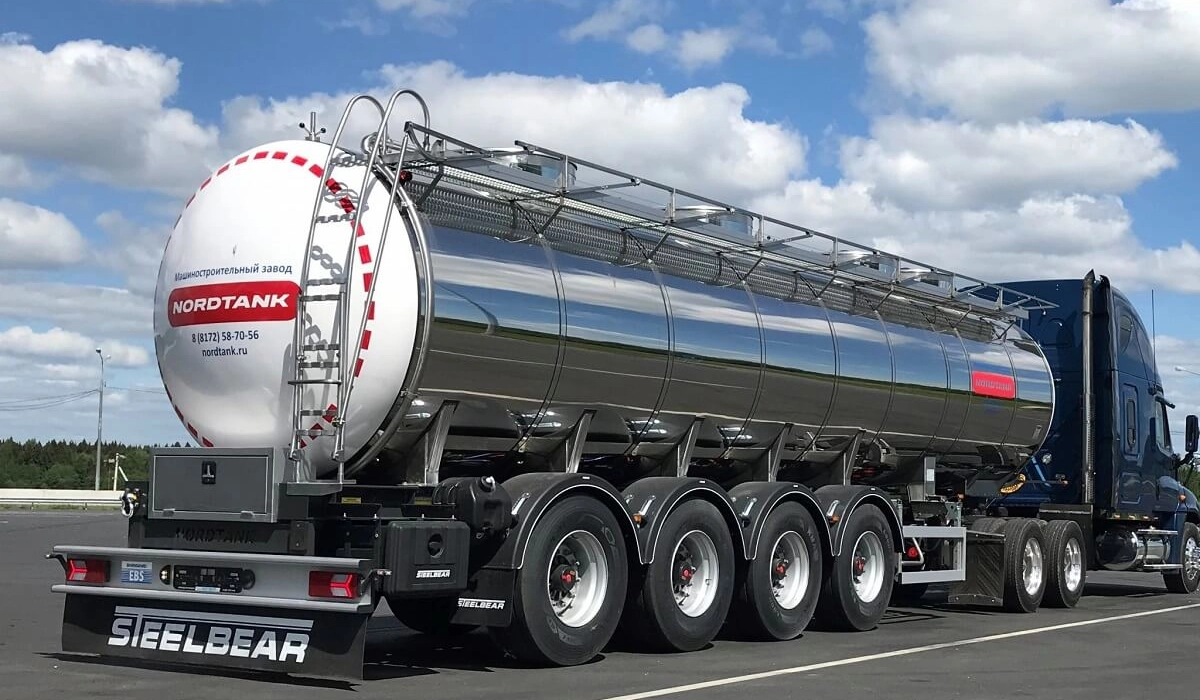
Tank Trucks for Transporting Sweet Products (in particular, glucose, syrup)
Tank trucks play a key role in transporting food liquids such as glucose, sugar syrup, and other viscous food substances. Without the proper approach to organizing transportation of sweet substances, the risk of spoiling the product and incurring financial losses increases. What requirements do tanks for sugar and glucose meet, what technologies are used to minimize the risk of cargo spoilage?
Features of Transport for Sweet Products
Main criteria for transport vehicles in the food industry – sterility, hermetic sealing, safety. The raw materials transported in such tank trucks are primarily used in the production of confectionery items, beverages, pharmaceuticals, and the medical industry. Therefore, violations of sanitary norms lead to serious consequences, up to product recall and reputational risks.
Tank trucks must meet several key parameters:
- Sanitary processing. Before each trip, the tank is thoroughly washed, disinfected, and dried, eliminating residues of the previous cargo.
- Hermetic sealing. It is not permissible for external environment to penetrate, for rain, dust, and foreign microorganisms to enter.
- Thermal insulation. The temperature inside the tank is controlled and maintained constant to prevent syrup crystallization and quality loss.
- Interactive sensors. Sensors for pressure, liquid level, and temperature are installed inside to monitor cargo condition in real time.
What factors affect product preservation?
Sweet solutions are characterized by viscosity, hygroscopicity, and ability to attract moisture from the surrounding environment. If transportation is improperly organized, problems may arise:
- Bacterial contamination. Sugar – a favorable environment for bacterial, fungal, and yeast multiplication. Non-compliance with hygiene standards leads to the development of pathogenic microorganisms.
- Damage to package integrity. A crack or defect in the tank walls compromises cargo integrity, leading to contamination and quality degradation.
- Temperature fluctuations. Excessive cooling or heating leads to changes in consistency, crystallization, and sugar crystallization.
Necessary Equipment and Technology
Modern tank trucks are equipped with heating, thermal insulation, and control sensors systems. Most commonly, they use thermal insulation inserts made of polystyrene foam or expanded polyurethane, maintaining the desired temperature. Electric heaters protect against liquid freezing at low temperatures, which is relevant for winter trips.
Internal tank lining plays an important role. The surface is treated with food-grade lacquer or enamel, preventing sugar adhesion and formation of hard-to-remove residues. Special pneumatic systems for draining prevent air bubble accumulation and stagnation. Installed filtering membranes purify the liquid from possible particles contained in the tank.