
What Does Filling Equipment Look Like
We will consider 2 main sections performing operations that determine the accuracy of container filling and product preservation throughout its entire shelf life.
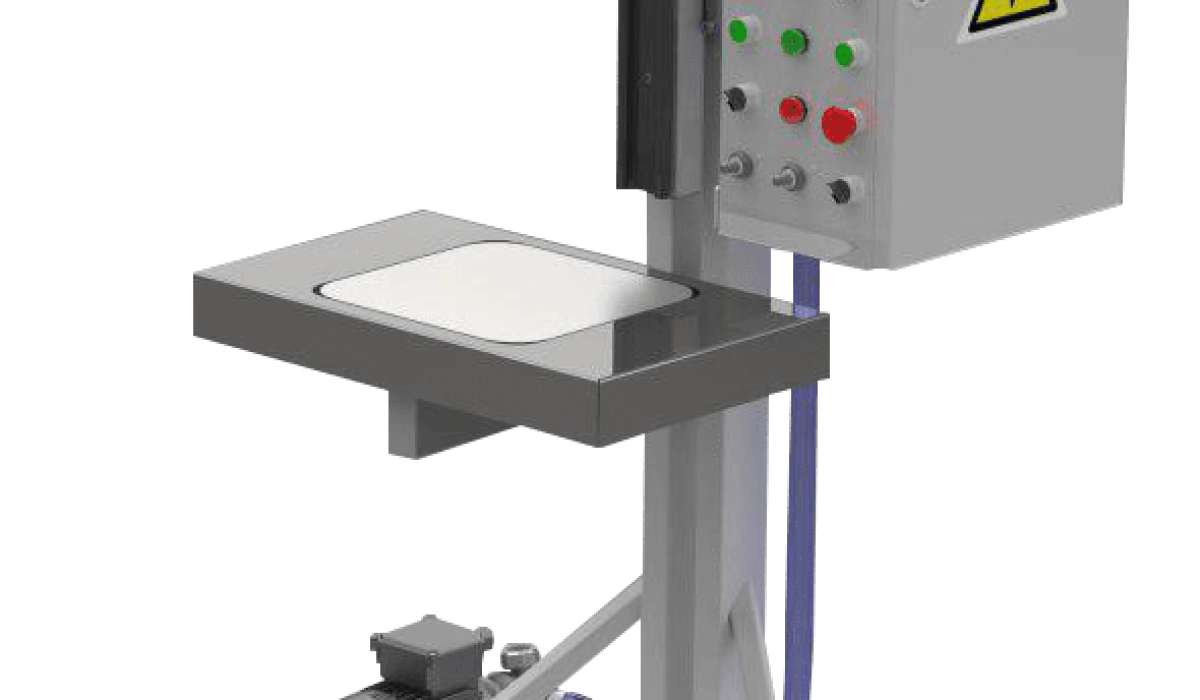
Filling line represents a complex of devices, including 4 key sections:
-
Container feeding.
-
Filling (dosing).
-
Capping (sealing).
-
Labeling.
Also, in filling equipment for liquid products (paste-like, viscous, etc.) may include quality control sections. If we are talking about a high-tech line, it can perform dozens of different operations. But we will consider 2 main sections performing operations that determine the accuracy of container filling and product preservation throughout its entire shelf life.
Filling Section

Filling equipment belongs to the main equipment on any factory. It depends on the maximum productivity and efficiency of the entire enterprise. The filling speed affects all subsequent technological processes.
The filling machine has 3 key features:
-
Feeding speed.
-
Accuracy of container filling.
-
Dosing range.
The productivity of filling devices in this case will be equal to the amount of quality product that was filled into consumer containers within a certain time unit. This parameter plays a significant role in choosing a specific machine, because if the wrong machine for dosing is selected, the device will slow down all other machines, negatively affecting the speed of the technological process and leading to downtime. As a result, the profitability of the enterprise will be low.
Before an empty consumer container enters the filling zone, it must be placed on a conveyor belt. Therefore, before the dosing section, equipment for feeding bottles/jars and so on is installed (or this task is performed manually by an operator if we are talking about small and medium enterprises).
After empty bottles are fed to a fully automated filling line, each container is tracked by a special system and stopped precisely in the filling zone, after which it is fixed by special mechanisms. Further movement of jars along the belt in this case is only possible after the container is completely filled with substance.
Capping Section
Capping and sealing is a process that allows sealing a container with substance to preserve its properties for the longest possible time, and the end consumer can perform first opening control (to ensure that no one opened the jar/bottle before them).

To solve these tasks, modern production facilities use various capping units with corresponding auxiliary elements:
-
nozzles designed for a specific type of neck;
-
vacuum chambers (air extraction);
-
various types of fixators;
-
etc.
Although capping is the last process in the technological chain for producing a certain product, after it, each jar or bottle must be labeled with information about properties, composition, brand logo and other necessary data. Moreover, the labeling complex contains the maximum number of different sensors for monitoring. Among other features:
-
different applicators for labeling can be used;
-
depending on the specific container, it may have one or two labels with specific information;
-
if the label is applied to glass or plastic containers in the form of a cylinder, the line is equipped with additional devices for stronger adhesion of the label to the material of the jar/bottle.
A Little About Quality Control
All the units discussed above are equipped with certain quality control systems. For example, when delivering the product, it is necessary to ensure maximum accurate dosing, so it is necessary to monitor the volume of substance in each container. If any deviations from the norm are identified, the product will be rejected.
Labeling Section is usually equipped with "machine vision" systems (if we are talking about large enterprises where tens of thousands of finished containers leave the conveyor daily). With this control, you can detect any, even minor inaccuracies in labeling the container or detect defects in the label itself. Also, "machine vision" allows tracking the date and other necessary additional information.
Ready Solutions for Line Automation

By fully automating each unit of the line, you can achieve high factory productivity and precision of each unit's operation. Also, automation allows:
-
reduce labor costs for paying employees;
-
improve the quality of the produced product;
-
ensure maximum shelf life of the substance.
For example, if using cappers of the popular Capper P series in Ukraine, we can achieve sealing from 400 to 700 containers per hour, which is advantageous for small and medium enterprises that simply do not need to produce products in large volumes.
If you install a semi-automatic labeling machine FlexLR or FlexLX (instead of hiring a worker to manually apply labels), this will provide an additional 300% productivity and allow producing about 20-40 containers with labels per minute.
Regarding dosing units, it is better to pay attention to the following solutions:
-
FlexW - semi-automatic weight dosing units capable of filling 400-800 containers/hour, with automatic calibration, and ability to change working elements to switch to another type of container.
-
FlexWX - semi-automatic units for working with viscous and thick products, widely used in various industries: food, chemical, cosmetic, agrochemical, and others.
-
FlexN - volumetric dosing equipment series equipped with European pumps, providing fast system flushing and high productivity up to 800 containers/hour.
All the above-mentioned devices are manufactured by FlexMash - one of the leaders in the industry for designing and creating automated units for simplifying work on production facilities of various purposes and scales.