
How to choose spare parts for agricultural machinery: original, license or analogue
The selection of components begins with understanding how critical a node is and what the consequences of a failure in the field or on the farm will be, so in difficult cases it is advisable to focus on proven provenance and quality control.
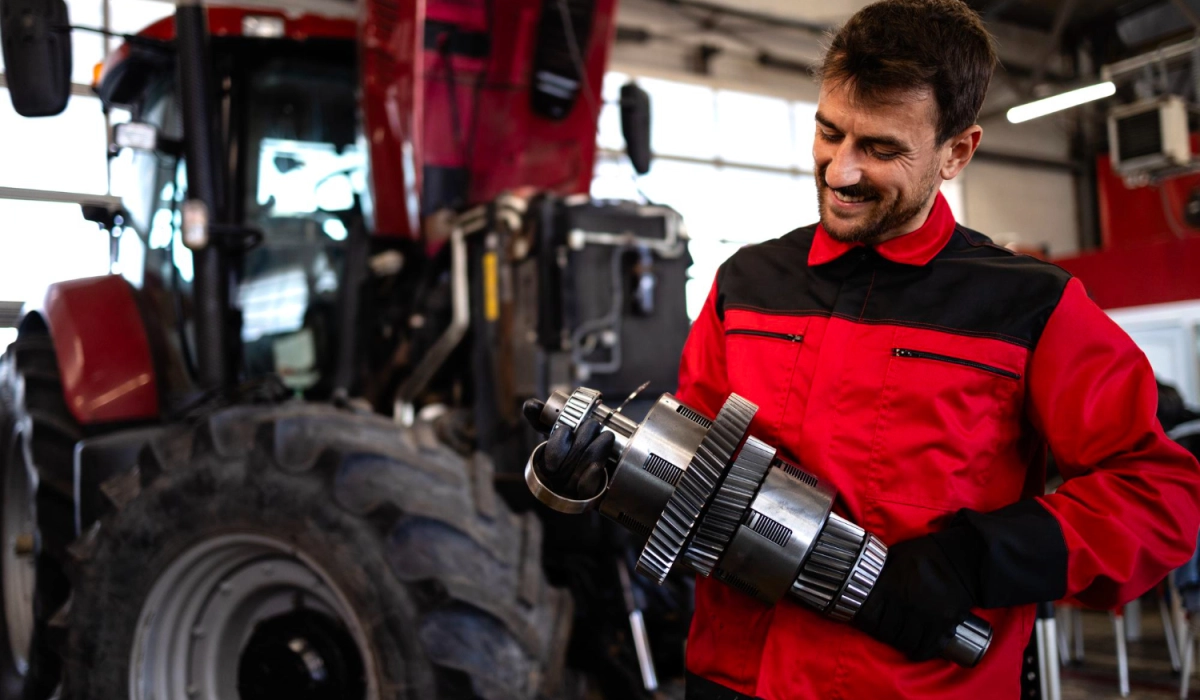
The selection of components begins with an understanding of how critical the node is and what the consequences of a failure in the field or on the farm will be, therefore, in difficult cases, it is advisable to focus on the proven origin and quality control offered by Agro-Dnepr for running positions and nodes with high load. Original parts are usually chosen for the engine, transmission, safety features, as well as for units where any discrepancy in size or material quickly leads to repeated repairs.
Licensed spare parts: balance of price and stable quality
Licensed components often become the optimal solution when predictable compatibility and resource are required, but the budget for repairs is limited, and this is where it is useful to correctly compare the catalog data and the modification of the equipment, especially when it comes to YUMZ spare parts for tractors that have long been are operated and may have different node versions. A license usually means production to specifications and standards, so the risk of discrepancies is less than in the case of random analogues, but it is still important to check the specific manufacturer and the presence of a warranty.
Analogues: how not to lose with compatibility and resource
Analogs are appropriate when the part is not critical, a quick replacement is needed, or the original is difficult to find, but the approach should be pragmatic: first determine the exact parameters, and only then select the corresponding one, so that MTZ spare parts fit without modifications and not caused additional wear of adjacent elements. Most often, analogues are taken for consumables, fasteners, parts of seals, individual electrical elements, but only if they are of correct size, material and fit.
What to look for in the catalog and upon receipt
In the catalog, it is important not only to find the name of the part, but also to check the article number, description of characteristics, reference to a specific system and the correct selection through filters. After receiving, it is worth inspecting the condition of the packaging, the conformity of markings, completeness and external geometry, and for parts with landings, additionally check the key dimensions before installation, in order to avoid losing time for disassembly and re-delivery.
How not to confuse compatibility within the same model
Even within the same series of tractors, units may differ by year of manufacture, engine type, gearbox modification, hydraulic or electrical equipment. Because of this, a part that looks correct in the photo sometimes does not fit properly or works with increased wear. The most reliable way is to compare by articles, sizes, type of connection and technical parameters, and not by a similar name. If a discontinued item is not available, it is appropriate to select a full-fledged analogue by parameters, and not by assumption.
When saving on an analogue turns into double payment
There are groups of details where the difference in quality is immediately reflected on the resource of the entire node. These are elements that work under high load, heat or have precise fits. In such cases, a cheaper option can give backlash, misalignment or accelerated wear of adjacent parts, and as a result, repairs become more expensive. This is especially noticeable when one part is replaced in an already worn unit without checking the accompanying elements, then the new part works in the wrong conditions and quickly fails.
Signs of a quality part during inspection
At the time of receipt, it is important to evaluate not only that the part arrived, but also how suitable it is for installation without risk. High-quality surface treatment, absence of burrs, uniform coating, correct threads, clear marking and conformity of completeness with the description usually indicate production control. If there is an opportunity, it is useful to immediately check the critical dimensions with a caliper, and for seals to check elasticity and the absence of deformations after transportation.
Selecting by symptoms: how to narrow your search without unnecessary shopping
When the cause of the breakdown is unknown, people often buy several options of spare parts at once, hoping that something will work. It is more rational to start with diagnostics and signs: atypical noise, vibration, overheating, leakage, pressure drop, change in controllability. After that, the selection is made according to the diagram of the node in order not to miss a small cause, such as a worn seal or a broken sleeve, which starts a chain of problems in more expensive elements.
How to speed up the selection and not make a mistake in the order
Most often, errors occur due to a lack of initial data. If you immediately prepare the model and modification of the equipment, the year of manufacture, the designation of the unit, a photo of the signboard or marking, as well as the dimensions or the article number from the old part, the selection becomes faster and more accurate. This is especially important for equipment that has undergone repairs or modernization, when the actual configuration already differs from the basic one.
Delivery, payment and planning of repairs for the season
During the season, each day of downtime can cost more than the difference between the types of components. Therefore, logistics and availability become part of the solution, sometimes it is more profitable to put a proven license item that will arrive quickly and without modifications, than to wait longer for a scarce option. For planned work, it is useful to form a set of consumables and small elements in advance, which most often stop the equipment, so as not to waste time on urgent orders.
Solutions for the task: what to choose in real scenarios
If the equipment works intensively, with heavy loads or in difficult conditions, the priority is a stable resource and landing accuracy, then it is logical to choose an original or a high-quality license for key systems. If the repair is urgent and the node is not critical, an analogue is allowed, but only after checking compatibility and parameters. This approach allows you to control the budget without loss of reliability and without repeated revisions.