
Timing and Torque Sequence for YAMZ-238 Cylinder Head: Step-by-Step Repair Guide
Professional guide to tightening the YAMZ-238 cylinder head. Torque, sequence, surface preparation, and inspection. Learn how to avoid gasket burnout and deformation. YAMZ parts and engines from the company "YARD" with warranty.
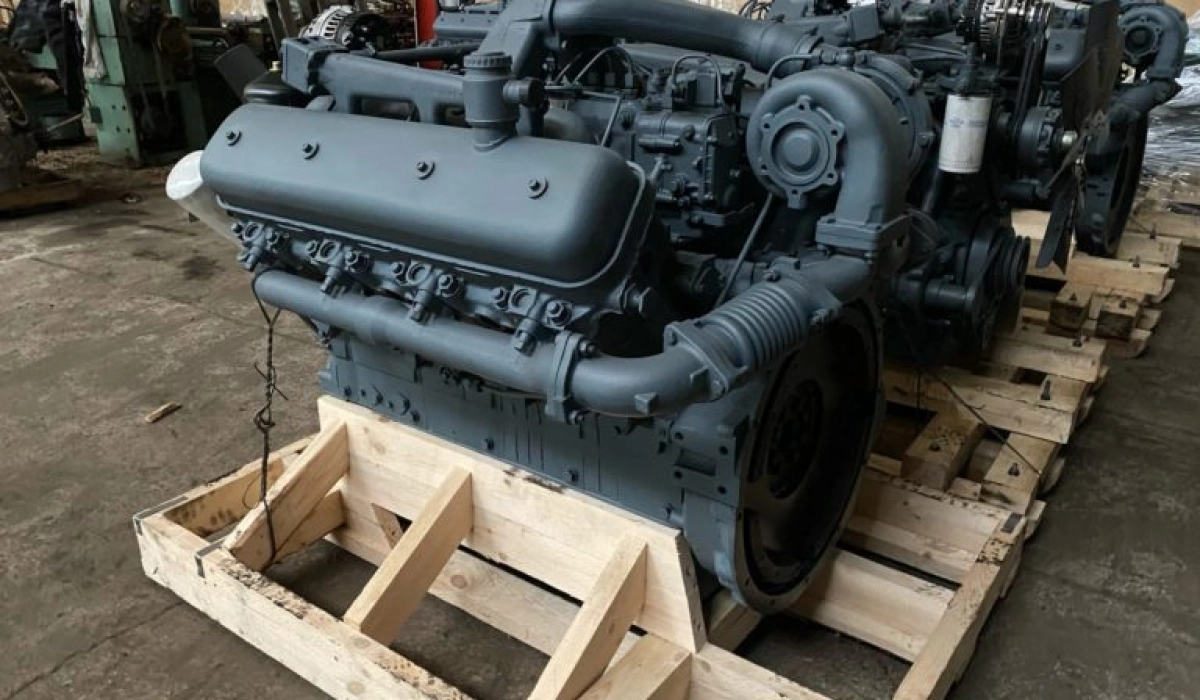
Installation of the cylinder head is one of the most critical operations during repair of YAMZ diesel engines. An error in torque or sequence of bolt tightening on the YAMZ-238 cylinder head inevitably leads to serious consequences: from gasket burnout and fluid leaks to deformation of the mounting surface, overheating, and as a result, premature major repairs.
In this guide, as YAMZ engine experts, we present a clear technical procedure for tightening the cylinder head, based on factory documentation.
Cost of Error: Why is Torque Sequence Important?
The cylinder head (CH) and cylinder block (CB) operate under extreme temperature variations and high gas pressure. The CH gasket seals three systems: valve train, lubrication, and cooling.
Violation of the tightening procedure leads to:
- Uneven gasket compression: "Weak" zones appear, through which exhaust gases, oil, or coolant begin to leak.
- Deformation (warpage) of the CH: Uneven bolt loads "press" the mounting surface.
- Gasket burnout: Gas leakage quickly destroys the gasket material, leading to fluid mixing and loss of compression.
- Engine overheating: Failure of the cooling system's seal.
- Bolt stretching or thread stripping: Excessive force (over-tightening) damages the bolts or thread holes in the block.
Following the procedure is not a recommendation, but a mandatory condition for reliable operation of the unit.
Preparation for Cylinder Head Installation: 3 Key Stages
Quality of tightening depends directly on preparation. You cannot install the CH on unprepared surfaces.
Stage 1: Cleaning and Inspection of Surfaces
- Cleaning: Completely remove old gasket residue, carbon, oil, and sealant from the CH and cylinder block mounting surfaces. Surfaces must be perfectly clean and dry.
- Flatness Check: Use a straightedge and feeler gauges to check the flatness of the CH. Maximum allowable deviations are specified in the engine's technical documentation. If the standard is exceeded, the CH must be milled or replaced.
- Thread Inspection: Check the condition of threads on bolts and in the block. Damaged or "stretched" threads will not allow the required force to be applied.
Stage 2: Checking Piston Rod Protrusion
A critically important parameter for YAMZ V-type engines. The protrusion of the piston rod flange above the block surface ensures secure contact with the head.
- Specification: 0.06–0.16 mm.
- Check: Measured with an indicator or special tool at four points around the piston rod.
- Consequences of Deviation: If protrusion is less than specification — the piston rod will "play," leading to gas leakage. If greater — excessive localized pressure on the CH.
Stage 3: Tool and Gasket Preparation
- Gasket: Use only new, original CH gaskets. Inspect for damage, creases, or delamination.
- Tool: Key tool — torque wrench with appropriate range (e.g., up to 300 N·m or 30 kgf·m) and suitable socket head (M-24). The wrench must be calibrated.
Torque and Sequence for YAMZ-238 Cylinder Head: Step-by-Step Instruction
Tightening the bolts securing the YAMZ-238 cylinder head is performed in two stages to ensure even gasket compression and prevent deformation.
Tightening Sequence (Diagram)
Tightening is always performed in a "criss-cross" pattern, starting from central bolts and moving toward the periphery (edges) of the head. This evenly distributes stress across the entire surface.
(Note: In the actual article, a graphical diagram with bolt numbering is typically placed here, taken from the YAMZ-238 technical manual).
Torque Value (Force)
The factory-specified torque for tightening the YAMZ-238 cylinder head bolts is:
240–260 N·m (24–26 kgf·m)
The procedure is performed in two stages:
- First Stage (Pre-tightening): All bolts are tightened in the specified order (criss-cross from center) to 120–130 N·m (approximately 50% of nominal value).
- Second Stage (Final Tightening): All bolts are tightened to the final value of 240–260 N·m in the same order.
Post-Assembly and Warm-Up Check
After assembly completion and initial engine start, the engine must be warmed to operating temperature (80–90°C).
After warming and subsequent cooling, mandatory re-tightening of all cylinder head bolts to nominal torque (240–260 N·m) is performed. This step is often ignored, but it is critically important for "settling" the gasket and ensuring long-term sealing of the entire YAMZ-238 engine.
Additional Torque Values (YAMZ-238)
During major engine repairs, it is important to follow specifications for other critical connections.
Element Tightening Torque, N·m (kgf·m) Main Bearing Cap Bolts (Vertical) 430–470 (43–47) Main Bearing Cap Bolts (Horizontal) 100–120 (10–12) Flywheel Housing Bolts 100–125 (10–12.5) Front Mount Bracket Bolts 90–110 (9–11)Conclusion
Correct cylinder head tightening on YAMZ-238 is a precise engineering procedure, not brute force. Adherence to cleanliness, surface inspection, use of a calibrated torque wrench, and strict compliance with the two-stage tightening sequence are guarantees of long-term, trouble-free diesel engine operation.