
How to Choose a Forklift for an Agricultural Warehouse: A Practical Guide
Choosing equipment for an agricultural warehouse requires consideration of specific conditions: here, work is done with pallets, boxes, and big-bags, often stored in unheated rooms or under awnings.
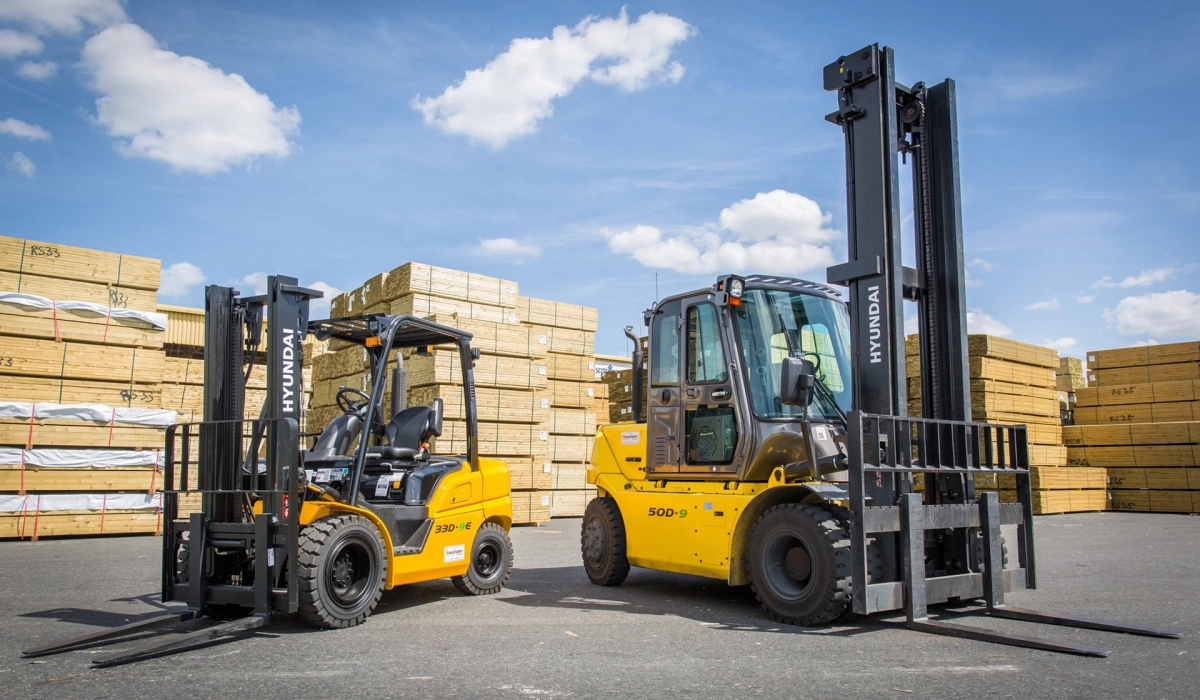
Choosing equipment for an agricultural warehouse requires consideration of specific conditions: here, work is done with pallets, boxes, and big-bags, often stored in unheated rooms or under awnings. Moreover, the equipment must handle gravel surfaces, dust, and uneven terrain. Forklifts — a universal solution for such tasks: they ensure fast and safe transport of heavy loads, simplify loading and unloading operations, and increase warehouse logistics efficiency.
Main criteria to consider when selecting equipment:
-
Load Capacity: for agricultural products, models from 1500 to 3000 kg are usually chosen.
-
Lifting Height: depends on warehouse configuration — typically from 3 to 5.5 meters.
-
Fuel Type: for enclosed spaces, electric models are preferred; for open areas — diesel or gas-benzene.
-
Ground Clearance and Traction: when working outdoors, large wheels and reinforced chassis are important.
Where to Find Reliable Solutions
A wide selection of equipment and spare parts with clear filtering by parameters can be found on the website https://shtabelery-ekb.ru/. The platform offers electric, gasoline, diesel, and mini-forklifts for any task. Conveniently, you can directly filter equipment by load capacity, fork lift height, battery type, and other characteristics on the page. This saves time and allows quickly selecting equipment suitable for specific storage conditions.
In addition, the website offers:
-
Conveyors and trolleys for additional mechanization;
-
Spare parts and components for equipment maintenance;
-
Consultation services for selection, including assistance in choosing for non-standard tasks.
Other Factors to Consider
When choosing, it is important to consider additional features and options:
-
Side Carriage Shift — simplifies maneuvering in narrow aisles;
-
Free Fork Lift Raise — relevant for working in spaces with low doorways;
-
Enclosed Cab — relevant for year-round operation outdoors;
-
Battery Type — lithium-ion models charge faster and are less prone to «memory effect».
Thus, selecting a forklift for an agricultural warehouse begins with evaluating working conditions, types of cargo, and infrastructure. Using available online tools and consulting with specialists, you can choose an optimal solution that ensures efficiency, reliability, and long service life of the equipment.
Types of Forklifts for the Agro Sector
Depending on tasks, you can choose one of the following types of forklifts:
-
Electric Forklifts — ideal for indoor warehouse, greenhouse, and processing facility operations. They do not emit exhaust gases, operate quietly, and are economical to run. Suitable for areas with high sanitary requirements.
-
Diesel Forklifts — reliable for outdoor work and resistant to harsh conditions: dust, dirt, temperature fluctuations. They have high power and are well-suited for transporting heavy bags of feed, grain, or fertilizers.
-
Gasoline Models — versatile, operate both indoors and outdoors, with lower noise and harmful emissions compared to diesel.
-
Mini-Forklifts — compact and maneuverable, suitable for working in confined spaces or between rack rows. Relevant for small farms or greenhouses.
The choice of specific type depends on warehouse size, logistics specifics, and loading schedule.
Technical Parameters Determining Selection
When selecting a forklift, consider the following technical specifications:
-
Load Capacity
For most agricultural warehouses, optimal models are 1.5–2.5 tons. Heavier machines (up to 5 tons and above) are used for working with big-bags and pallets in logistics hubs. -
Fork Lift Height
If the warehouse uses multi-level racks, equipment with lift heights from 4 to 6 meters is required. For standard spaces, 3–4 meters is sufficient. -
Mast Type
Two-section (two-frame) is suitable for outdoor work, three-section — for indoor spaces with limited entry height and need for greater lift. -
Free Lift
This feature allows lifting forks without increasing the mast height — important for working in containers or low doorways. -
Ground Clearance and Wheel Type
On uneven or gravel surfaces, models with higher ground clearance and pneumatic tires work better. -
Ergonomics and Comfort
For operators, it is important to have cabin heating, good visibility, seat suspension, and intuitive controls.
Service and Spare Parts — Not an Afterthought
When operating warehouse equipment in the agro sector, timely maintenance is extremely important. When selecting a supplier, consider:
-
Availability of official warranty for equipment;
-
Ability to order original or compatible spare parts;
-
Availability of service support in your region;
-
Ability to arrange on-site specialist diagnostics and repairs.
Common Mistakes to Avoid When Choosing
When selecting a forklift for an agricultural warehouse, it is important to consider not only technical specifications but also real operating conditions. Below are the most common mistakes:
-
Overpowering
Often, too powerful and heavy equipment is purchased, which is unnecessary for daily tasks. This leads to budget overruns and inefficient operation. -
Ignoring Ground Conditions
If equipment will operate on gravel or dirt, models with smooth tires and low ground clearance will quickly fail or get stuck. Better to choose forklifts with large pneumatic wheels. -
Choosing Without Reserve Load Capacity
If the forklift is rated exactly for 1500 kg, and you occasionally transport pallets with overloads — this will lead to increased wear and risk of an accident. -
Rejecting Additional Options
Side carriage shift, free lift, reinforced masts — all these features make work easier, especially with tightly spaced racks. -
Ignoring Maintenance Conditions
Even the most reliable equipment requires maintenance. If there is no service or spare parts in your region, equipment downtime can result in losses.