
Care for Young Seedlings After Planting: Watering, Pruning, and Protection
After planting, the plant needs special attention, because this is the period when tree seedlings adapt best to a new location, form their root system, and lay the foundation for further growth. If proper watering, light shading when needed, and…
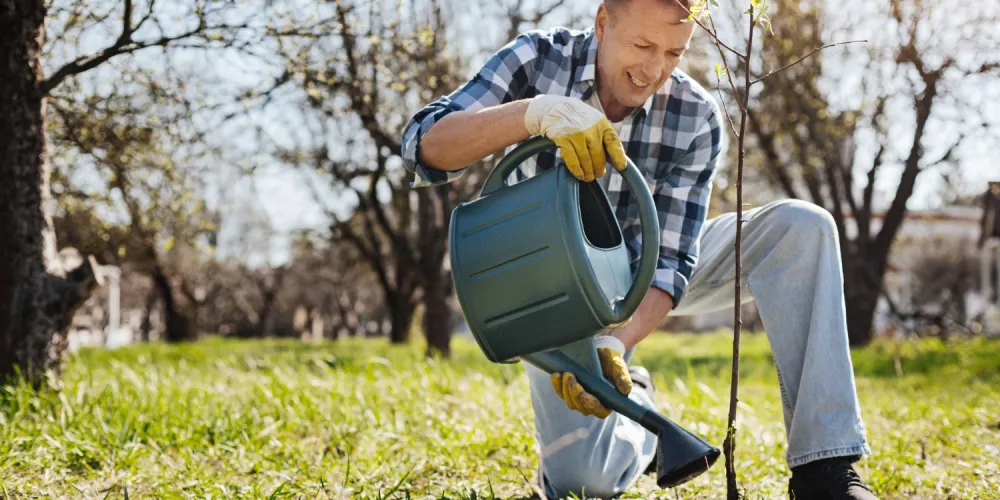
What Is Important to Do Immediately After Planting
After planting, the plant needs special attention, because this is the period when tree seedlings adapt best to a new location, form their root system, and lay the foundation for further growth. If proper watering, light shading when needed, and protection from stress are provided during the first weeks, the young tree will take root much faster and begin to develop actively.
This is especially important for varietal plants, because November pear can root well, form a strong crown, and produce a stable harvest in the future with proper care. After planting, it is important to monitor soil moisture, prevent the trunk circle from drying out, and regularly check the overall condition of the young tree.
Proper Watering in the First Months
Watering is one of the key factors for successful rooting. Immediately after planting, the tree should be watered generously so that the soil fits tightly around the roots and no air pockets remain. During the first season, the frequency of watering depends on the weather, soil type, and growing location. On light soils, moisture evaporates faster, so watering may be needed more often than on denser and more fertile areas.
During hot weather, young plants are watered regularly, but without excessive waterlogging. The soil should be moderately moist, not swampy. To retain moisture, it is worth using mulch made from bark, humus, mown grass, or straw. This also helps suppress weed growth and maintain a more stable soil temperature.
When and How to Prune
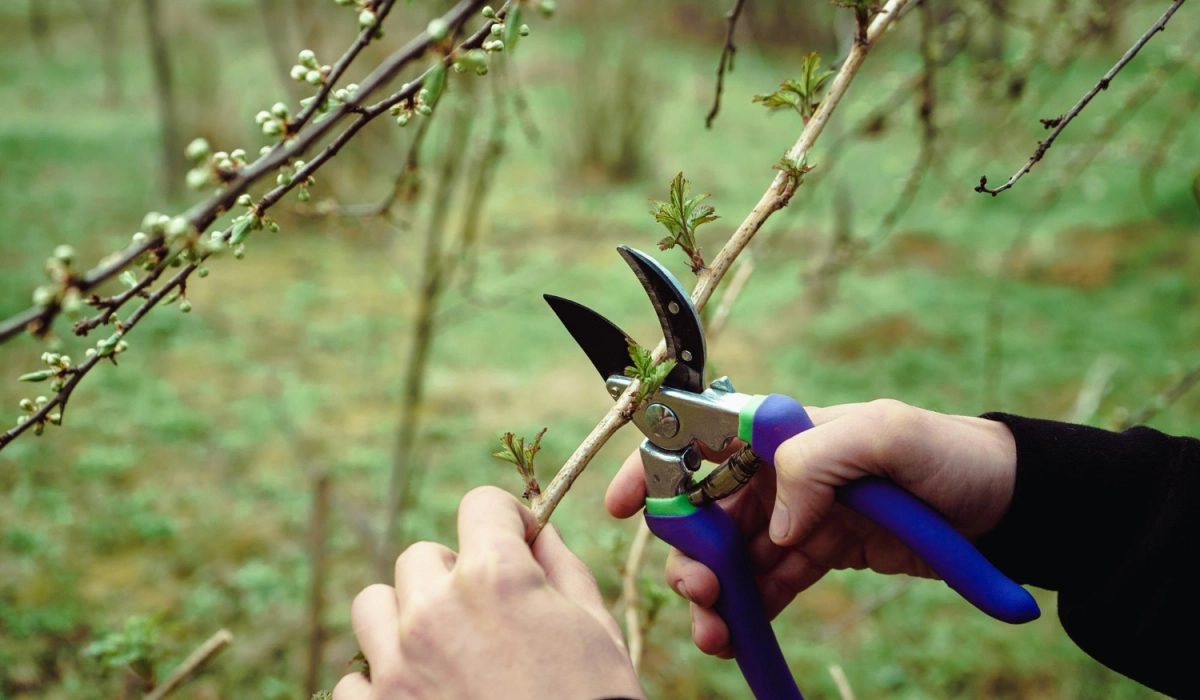
After planting, pruning is needed to reduce the load on the root system and help the plant develop properly. If the tree has damaged, dry, or overly weak shoots, they should be carefully removed. In some cases, formative shortening of branches is carried out so that the aboveground part matches the capacity of the roots after transplanting.
In spring, pruning is aimed at crown formation, improving lighting, and air circulation. In summer, light correction can be performed if clearly weak or damaged shoots appear. In autumn, sanitary cleaning of the tree is usually carried out. The main rule is not to overload the young plant with excessive intervention, especially in the first year after planting.
Protection Against Diseases, Pests, and Unfavorable Conditions
Young trees are especially sensitive to temperature changes, strong wind, fungal infections, and insect pests. That is why after planting it is important to inspect the leaves, shoots, and trunk in order to notice any problems in time. Prevention is always more effective than treating an already weakened plant.
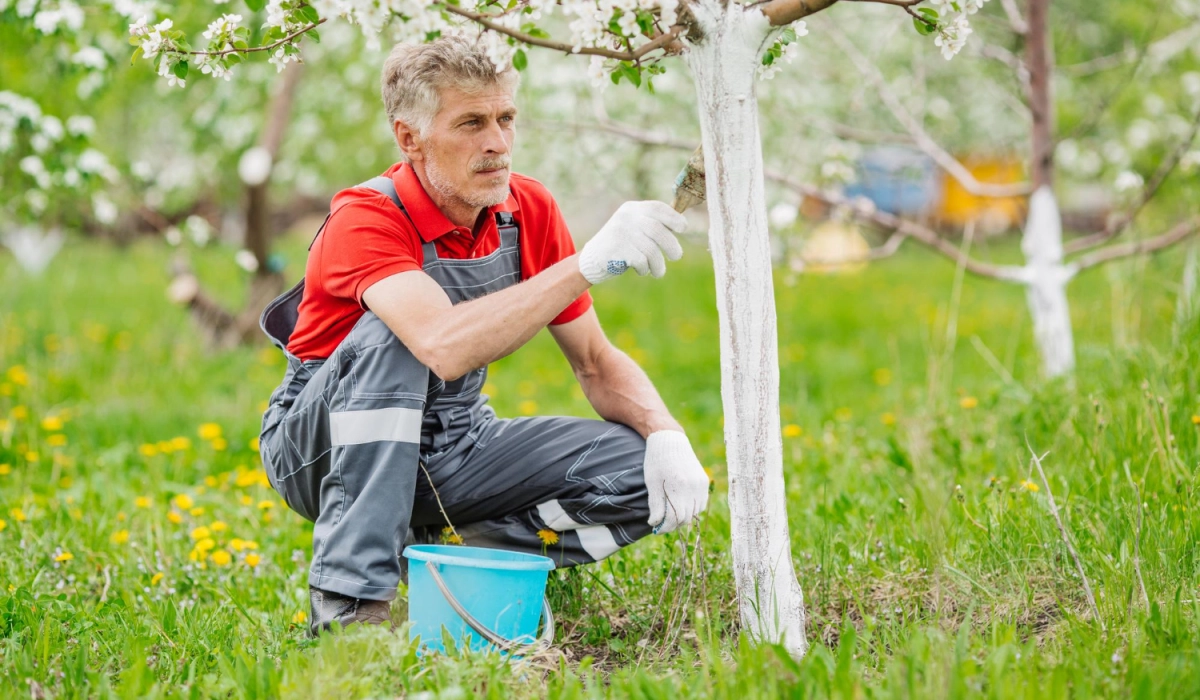
The trunk circle should be kept clean, without weeds that take away moisture and nutrients. If necessary, the young tree is tied to a support so that it does not lean because of the wind. It is also useful to whitewash the trunk or use protective materials for the stem if there is a risk of sunburn, temperature fluctuations, or damage from rodents.
- water regularly, taking into account the weather and soil condition
- mulch the trunk circle to retain moisture
- remove dry and damaged shoots
- watch for spots on leaves and signs of pests
- tie the young tree to a support
- protect the bark from sun, cold, and mechanical damage
Care During the First Season
The first year after planting is considered decisive for the future development of the tree. During this time, the plant should not be overloaded with excessive fertilizing or radical pruning. It is much more important to provide stable watering, air access to the roots, and protection from external stress factors. If the soil becomes compacted after rain or watering, it should be carefully loosened without damaging the root system.
Fertilizers are applied moderately, based on the condition of the soil and the needs of the crop. An excess of fertilizers can be just as harmful as a deficiency. If the plant looks healthy, has good growth, and normal leaf color, basic care without overloading it with additional products is enough.
Why It Is Convenient to Order Planting Material by Mail
Today, many gardeners choose to order plants online, because this makes it possible to calmly review the characteristics of varieties, compare options, and choose the best solutions for their plot. In the Ayris catalog, you can find different fruit crops, pay attention to ripening periods, pollination type, fruit features, and recommended growing conditions.
Ordering by mail is convenient because there is no need to spend time traveling and searching for the right variety in different stores. When choosing a reliable seller, the buyer receives quality planting material, a detailed product description, advice on planting and care, and the opportunity to select plants according to their region and growing conditions.
Typical Mistakes After Planting
The most common mistake is that a young tree is either watered too much or left without moisture during the most important rooting period. Both situations are dangerous. When there is not enough water, the roots cannot develop actively, and when moisture stagnates, the risk of rotting increases. Therefore, it is better not to water according to a strict schedule, but to check the soil condition at a depth of several centimeters.
Another common problem is planting without considering lighting. Most fruit trees need a sunny location, because light affects growth strength, flowering quality, and future yield. If a tree is planted in shade, it may stretch, form fruit buds more weakly, and get sick more often because of poor air circulation.
How to Understand That a Seedling Has Taken Root Well
The first sign of successful rooting is the appearance of new growth. Young shoots, healthy leaf color, and no wilting indicate that the plant is gradually adapting to its new location. It is also important to pay attention to the trunk and bark. They should remain firm, without cracks, spots, or signs of damage.
If the leaves slightly lose turgor in the first days after planting, this does not always mean a serious problem. The plant may be experiencing transplant stress. But if wilting becomes stronger, the leaves curl, and the tips of the shoots begin to dry out, it is necessary to check soil moisture, the condition of the root collar, and the presence of pests.
Preparing Young Trees for Winter
At the end of the season, it is important to help the young tree safely enter its dormant period. Before frost, moisture-charging watering is carried out if the autumn was dry. This helps the roots survive the cold period better and reduces the risk of winter drying. The trunk circle can be mulched, but the mulch layer should not fit tightly against the trunk.
In regions with severe frosts or sharp temperature changes, young trees should be additionally protected. Agrofiber, garden nets, or other materials that do not block air access can be used for this. Special attention should be paid to protection against rodents, because in winter they can damage the bark near the base of the trunk.
The Role of Quality Planting Material
Even the best care will not give the expected result if a weak or damaged plant is chosen at the start. A quality seedling should have a well-developed root system, healthy shoots, the right size, and clearly indicated varietal characteristics. That is why it is worth paying attention not only to the price, but also to the origin of the planting material, the variety description, and shipping conditions.
Ordering from Ayris makes it possible to choose plants by important parameters: ripening period, fruit taste, size, pollination type, frost resistance, and planting period. This approach helps avoid buying random plants and makes it possible to create a garden with consideration for the climate, plot size, and personal expectations for the harvest.
Long-Term Care and Formation of a Productive Garden
After the first year, care gradually changes. The tree already holds better in the soil, grows its crown more actively, and needs regular formation. During this period, it is important not to neglect pruning, because a properly formed crown makes harvesting easier, improves branch lighting, and reduces the risk of fungal diseases.
It is also worth maintaining a balance between growth and fruiting. If a young tree forms too many ovaries too early, some of the fruits should be removed so that the plant does not become exhausted. In the first years, the gardener’s main task is not to get the maximum harvest immediately, but to help the tree form a strong foundation for stable fruiting in the future.
Editorial team agronom.info
Materials are prepared by the portal's agronomists and editors. We use only trusted sources: Ukrainian agricultural universities, variety registries, open scientific publications.
Related articles
Not yet comments. Be the first!
Comments