
Pruning — one of the oldest methods of care for fruit trees and berry shrubs
It was applied long before people learned to fertilize plants with mineral nutrients and protect them from pests and diseases. The earliest references to pruning date back to the 3rd century BCE.
Pruning — one of the oldest methods of care for fruit trees and berry shrubs. It was applied long before people learned to fertilize plants with mineral nutrients and protect them from pests and diseases. The earliest references to pruning date back to the 3rd century BCE. It was noted that when growing fruit trees, one should remove dry, growth-inhibiting branches. At that time, pruning was already considered a radical means of regulating growth and fruiting. Thus, Columella — an ancient Roman philosopher and a great expert in agronomy — believed that garden care is a 'request,' fertilization is assistance, and pruning is coercion to make trees bear fruit. Many interesting things about grafting and pruning of fruit trees can be found in the writings of other ancient Roman philosophers — Cato, Varro, and Pliny the Elder.
Over centuries of practice, pruning techniques were refined and perfected, new methods for regulating growth and fruiting were developed. As a result, by the medieval period, people had learned to create crown forms that combined high decorative value with abundant yields. Nevertheless, pruning remains one of the most complex issues in agronomy. No other agricultural activity causes as much debate and conflicting opinions. This is understandable. The abundance of fruit crops, and within each crop, a large number of varieties differing in growth and fruiting characteristics, already implies different plant responses to branch removal or changes in their spatial position and role within the crown. Moreover, environmental conditions, which vary from year to year even in the same location, must be considered, as well as the plant’s condition, influenced by its age, usage specifics, reaction to temperature conditions, availability of mineral nutrients, moisture, etc.
Economic conditions significantly influence the purpose of pruning and, accordingly, the choice of methods: requirements to shorten the pre-bearing period, quantitative and qualitative yield indicators, production costs, reduction of labor input, and increased mechanization of labor-intensive processes. All this forces us to constantly seek the most rational crown forms and pruning methods that meet modern production requirements and allow plants to fully realize their potential. For this reason, modern fruit growing already includes not dozens, but hundreds of different crown forms, differing in external dimensions, structural composition, types of growth and fruiting formations, methods of regulating growth and fruiting, and adaptability to specific planting configurations.
Remember that the more intensive the crown form — i.e., the fewer multi-year branches it contains, the more frequently older branches are replaced by new, more fruit-bearing ones, the less space is allocated to each tree’s crown, and the higher the demands for the quantity and quality of fruit per square meter of projected crown area — the stricter the requirements for timely and quality execution of all technological tasks.
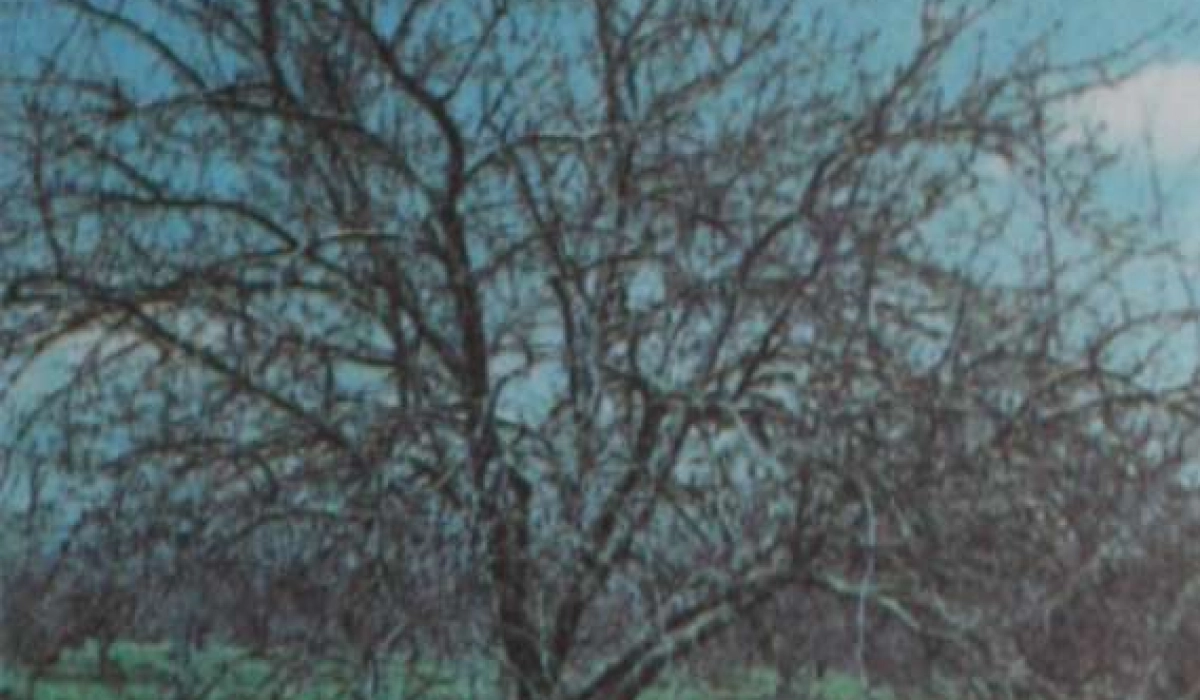
It is necessary to consider that pruning is only one part of the overall complex of plant care measures, which cannot replace mineral nutrition, irrigation, or other agronomic practices. The best pruning, applied on a poor agronomic background, may prove ineffective, or even harmful. On the other hand, no existing agronomic method can replace pruning. Indeed, with good soil care, adequate moisture and mineral nutrition, it is sometimes possible to forego pruning and still achieve good yields. However, soon some trees develop elongated, spindly crowns, while others suffer from excessive crowding at the periphery and bareness in the inner parts. If growth and fruiting are not properly regulated, trees begin to bear fruit intermittently, fruit quality deteriorates sharply, and cold resistance weakens. Due to uneven branch growth, sharp crotches form, which leads to crown weakness and breakage.
Proper and timely pruning, carried out against a background of good overall agronomy, promotes earlier and faster fruiting, annual optimal yields for each variety, improved fruit quality, increased cold resistance of trees, easier work during pruning, pest and disease control, harvesting, and rational use of garden area and space.
Naturally, no single guide can cover all possible practical variations in pruning. Therefore, we aimed first to outline the general laws of crown formation and pruning, present the most typical examples, whose purpose is to help gardeners learn to orient themselves independently in each specific case.
We also took into account that gardeners are a creative people. In any system of crown formation and pruning, any garden design, no matter how perfect it may seem, gardeners strive to make modifications aimed at simplifying methods to achieve the desired goal, increasing yield, improving fruit quality, and enhancing the efficiency of fruit tree use of occupied area, solar energy, mineral nutrients, and moisture. Through crown shape and structure, one can easily influence the final result — yield within limits that extend to infinity. In one of the album sections, some recent developments are presented, which have been recognized by authoritative experts as inventions. Get acquainted with them. Perhaps they will inspire your own creativity.
Fig. 1. Elongated, spindly branches.

Fig. 2. Severe crowding, sharp angles, branch dieback.

Fig. 3. Productive canopy shifting to the periphery.

Fig. 4. Tree break.

Source:
Kudryavets R. P.
Pruning of fruit trees and berry shrubs: Album. — Moscow: Agropromizdat, 1991. — 224 p.: ill.